Papworth Residency 2008 - 2010
An Artist in the Operating Theatre
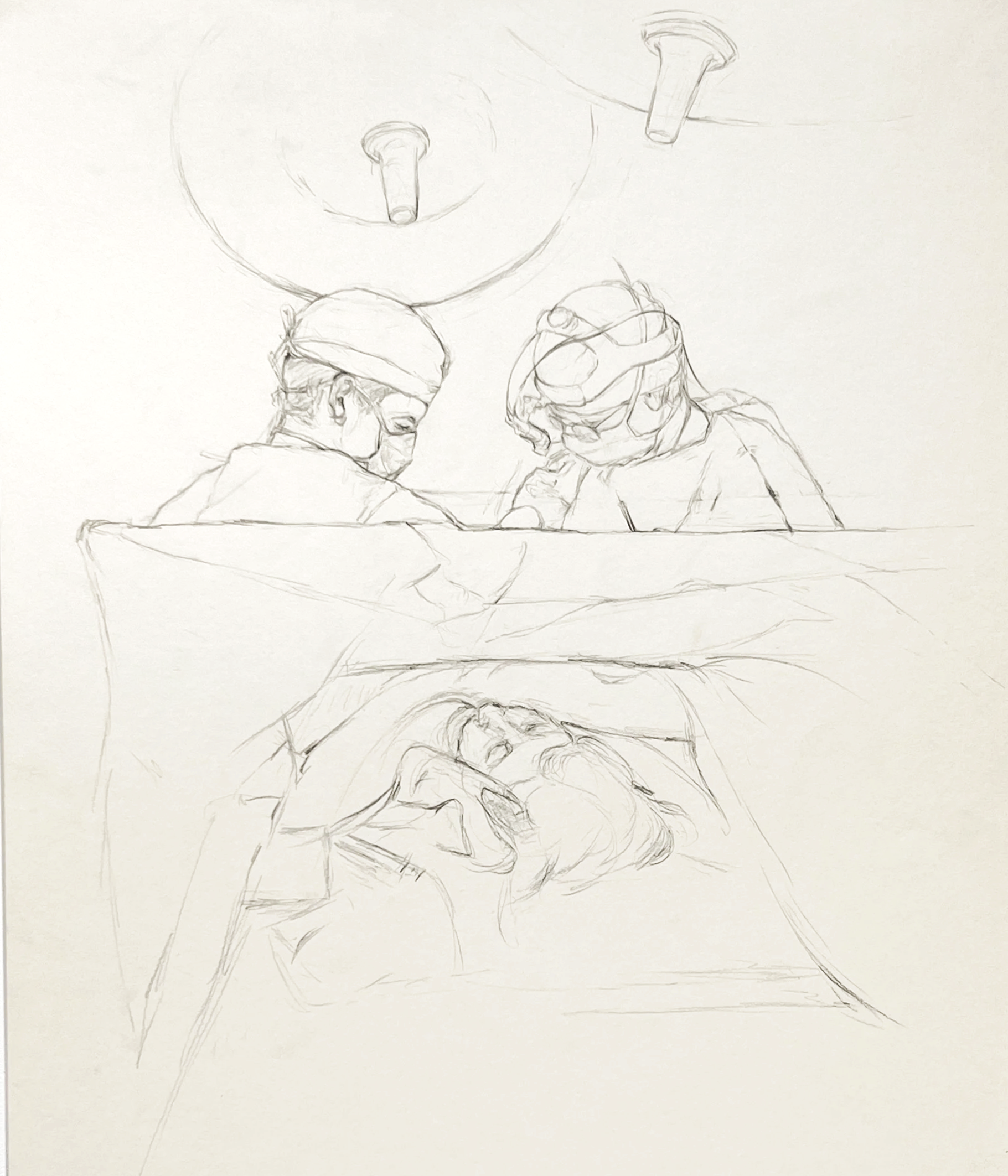
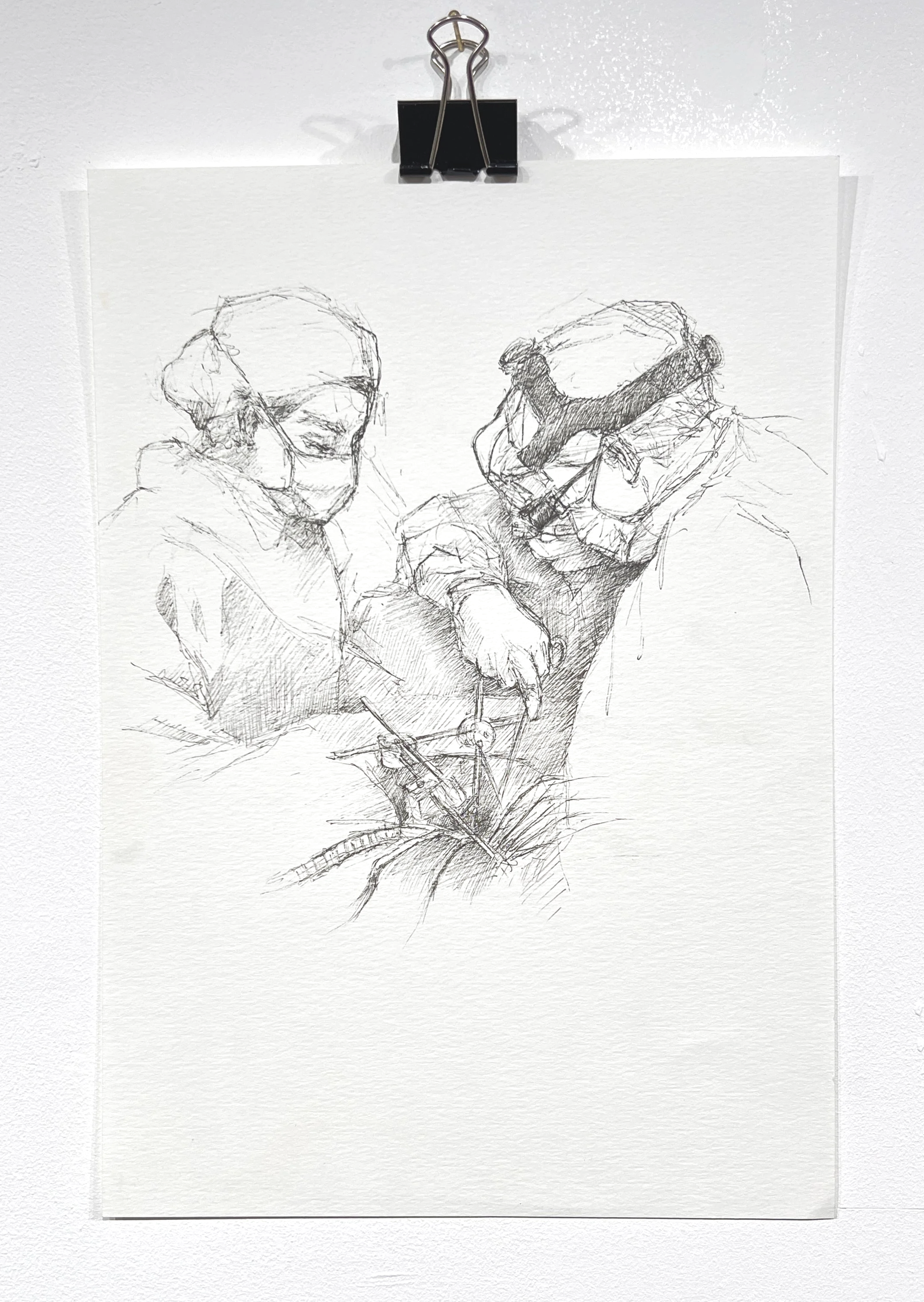
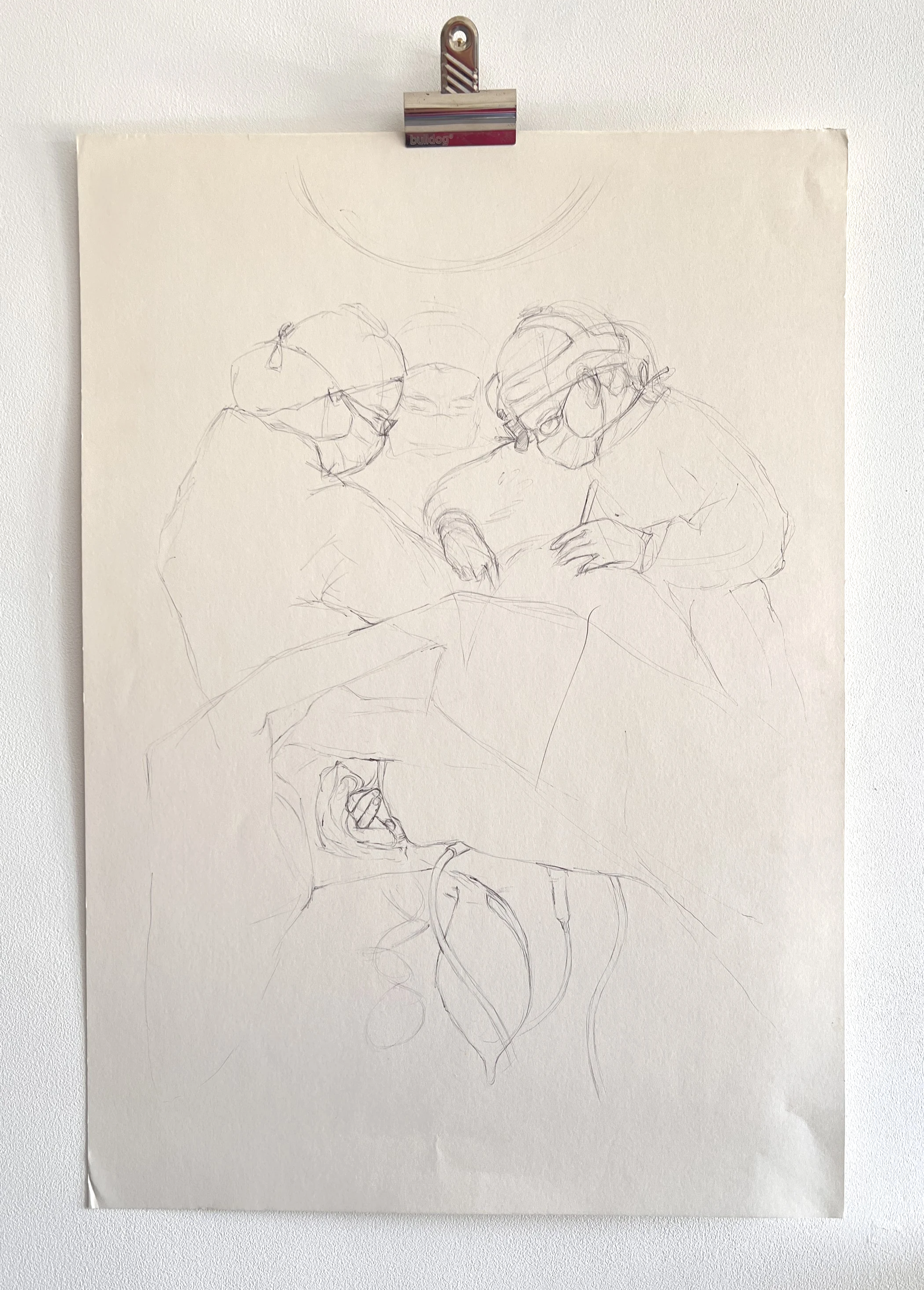
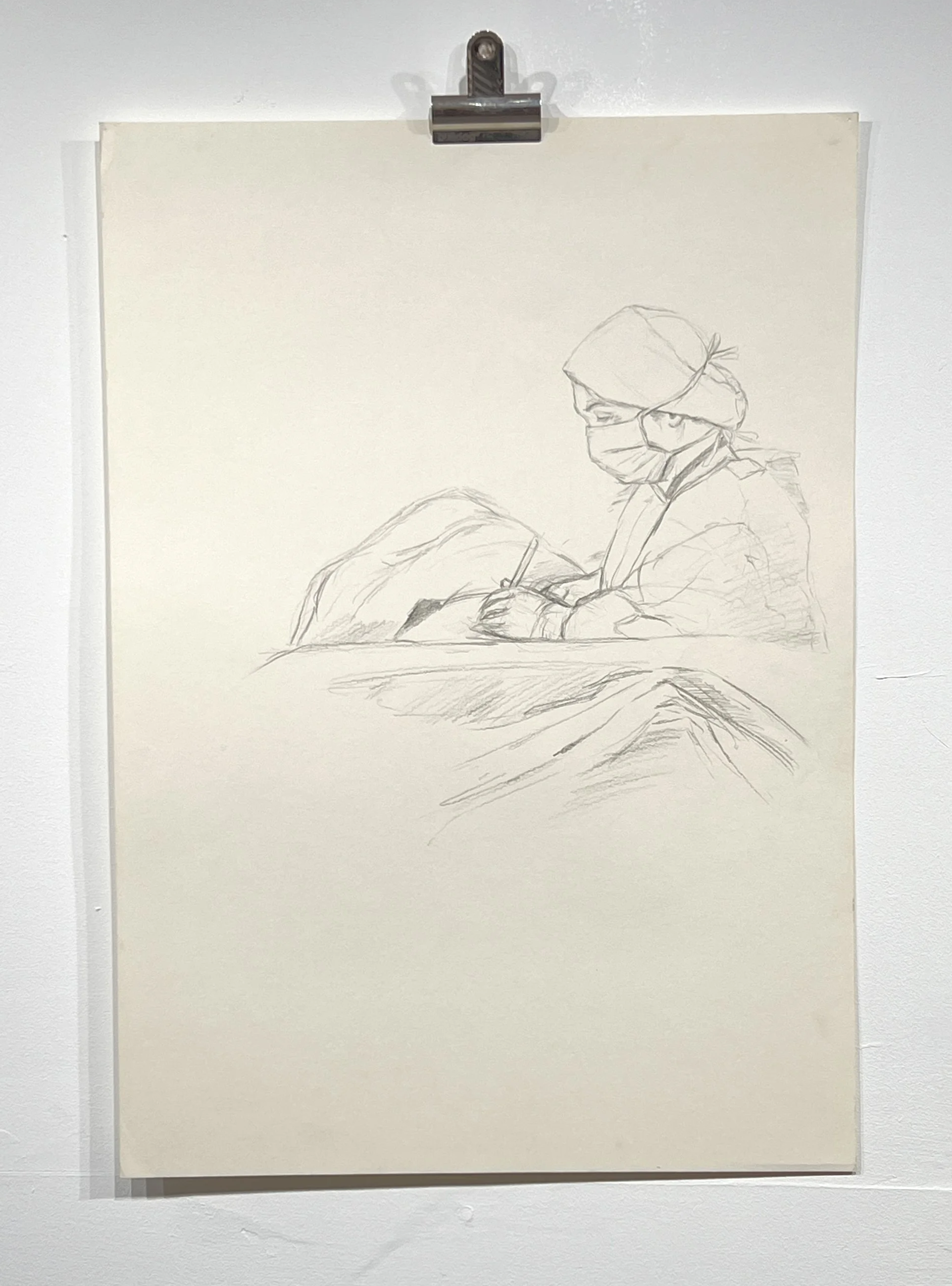
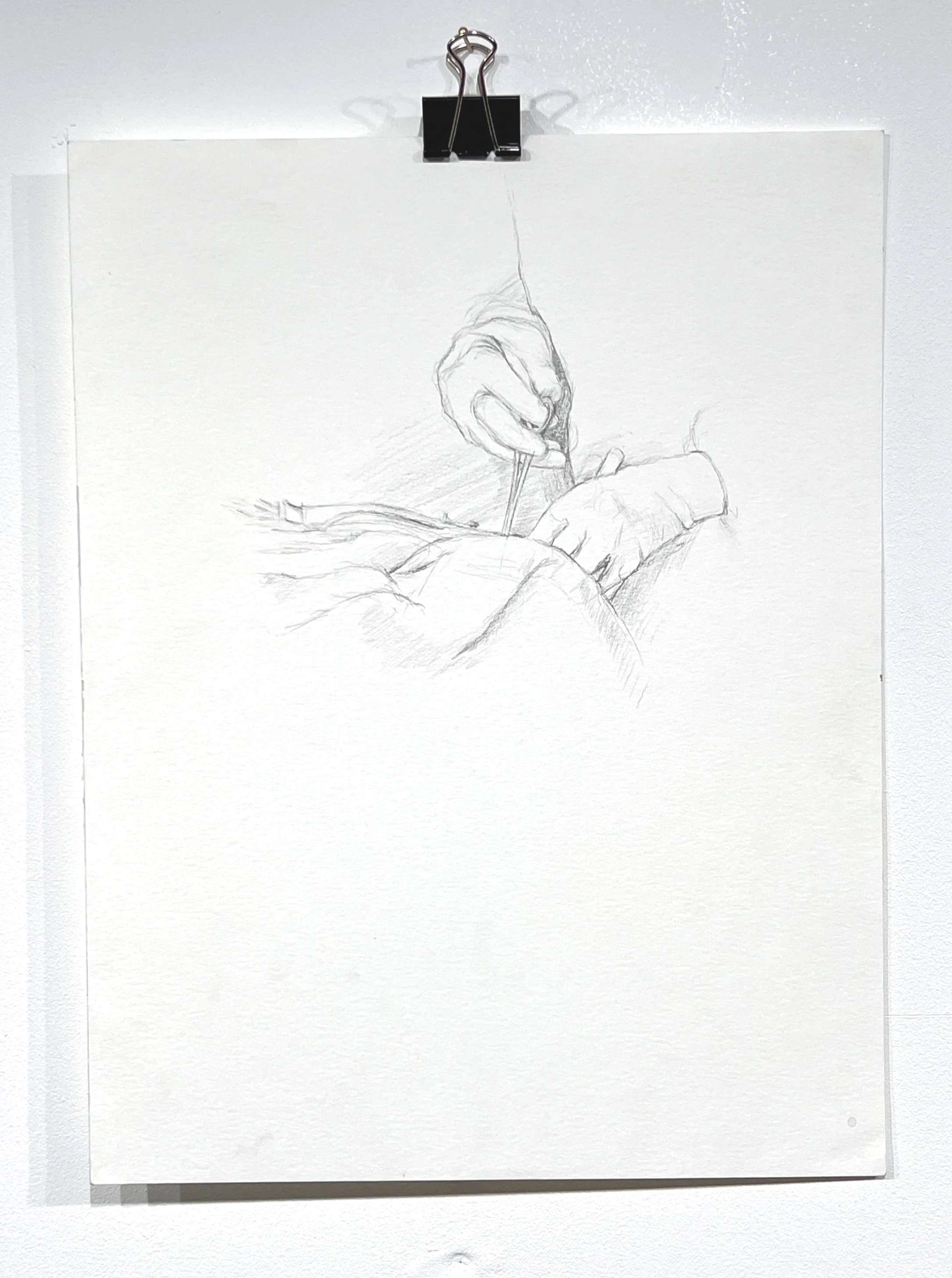
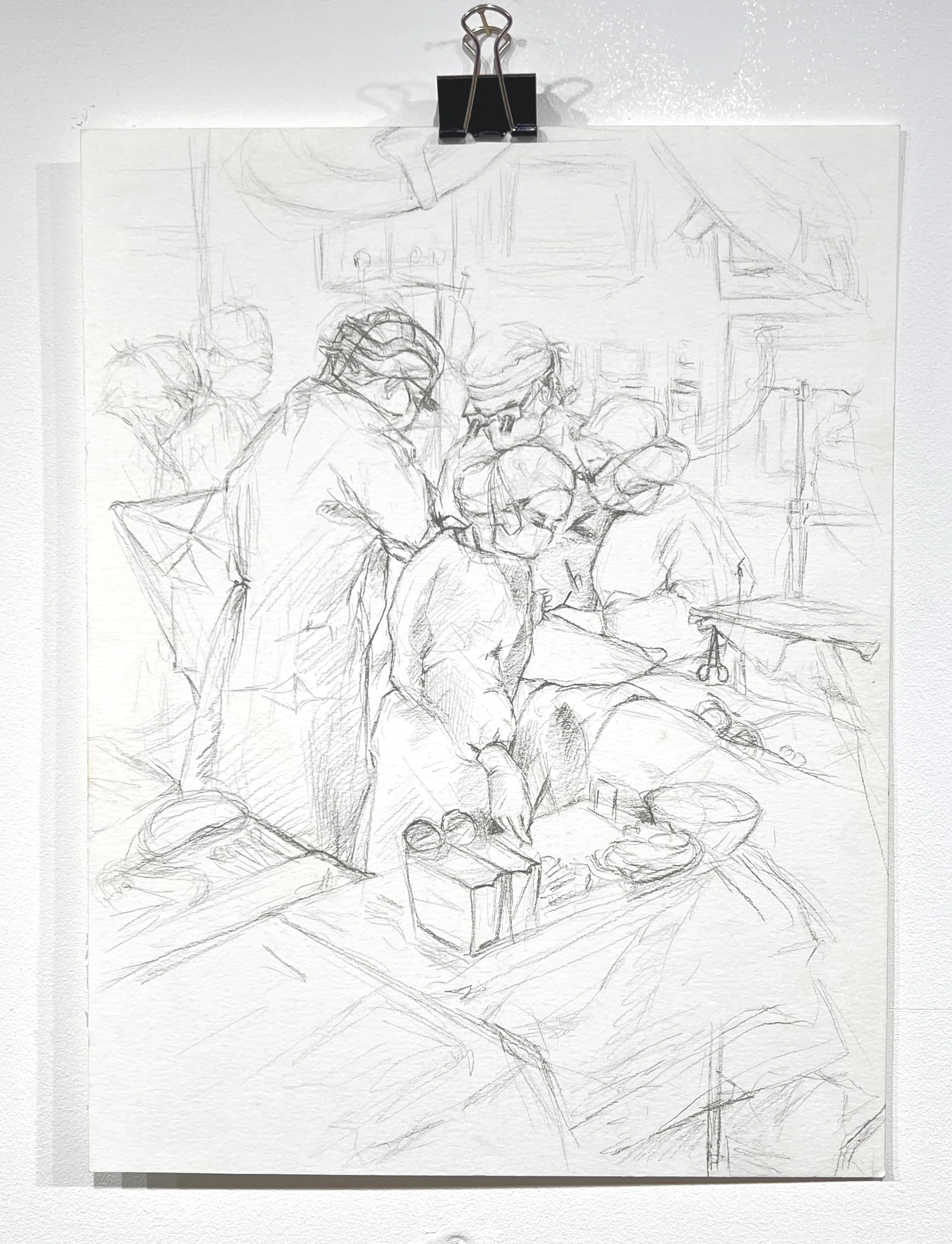
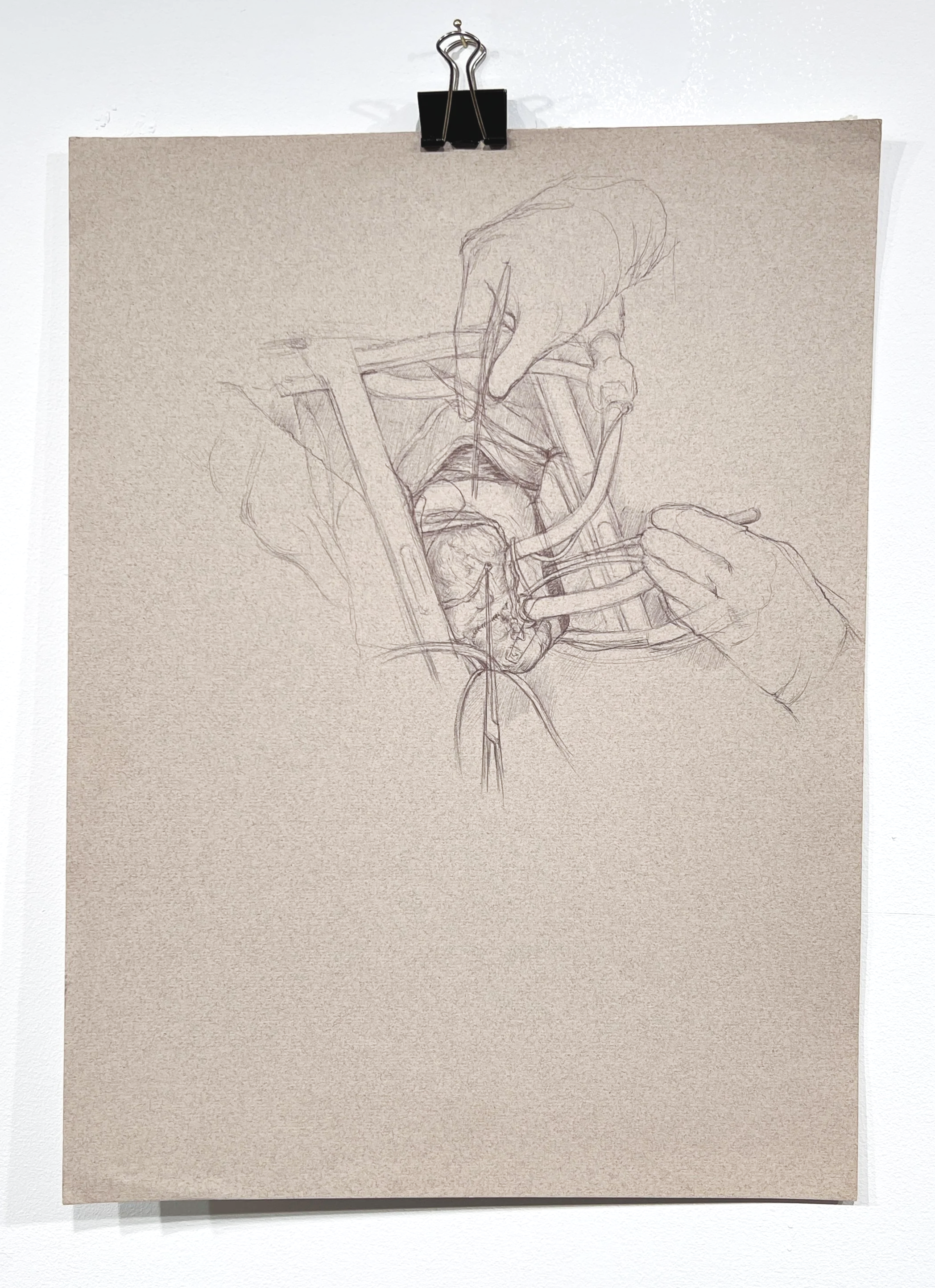
Francis Wells, surgeon, and his assistant surgeon performing open heart surgery. Pencil on paper
In August 2008, I wore surgical scrubs for the first time; I found I could keep a short pencil and pen in my only pocket and tucked a pad of paper under my arm. Stepping out of my comfort zone but keeping my favourite tools, I had the extraordinary experience of witnessing and drawing open heart surgery at the Papworth Hospital.
I had graduated from art school the month before, with a facility in anatomy learned in the life room, and perhaps I already had an intuition for surgery inherited from Robert Liston (my great great grandfather and a renowned pre-anaesthesia surgeon). I felt immediately engaged by the quiet drama of surgery.
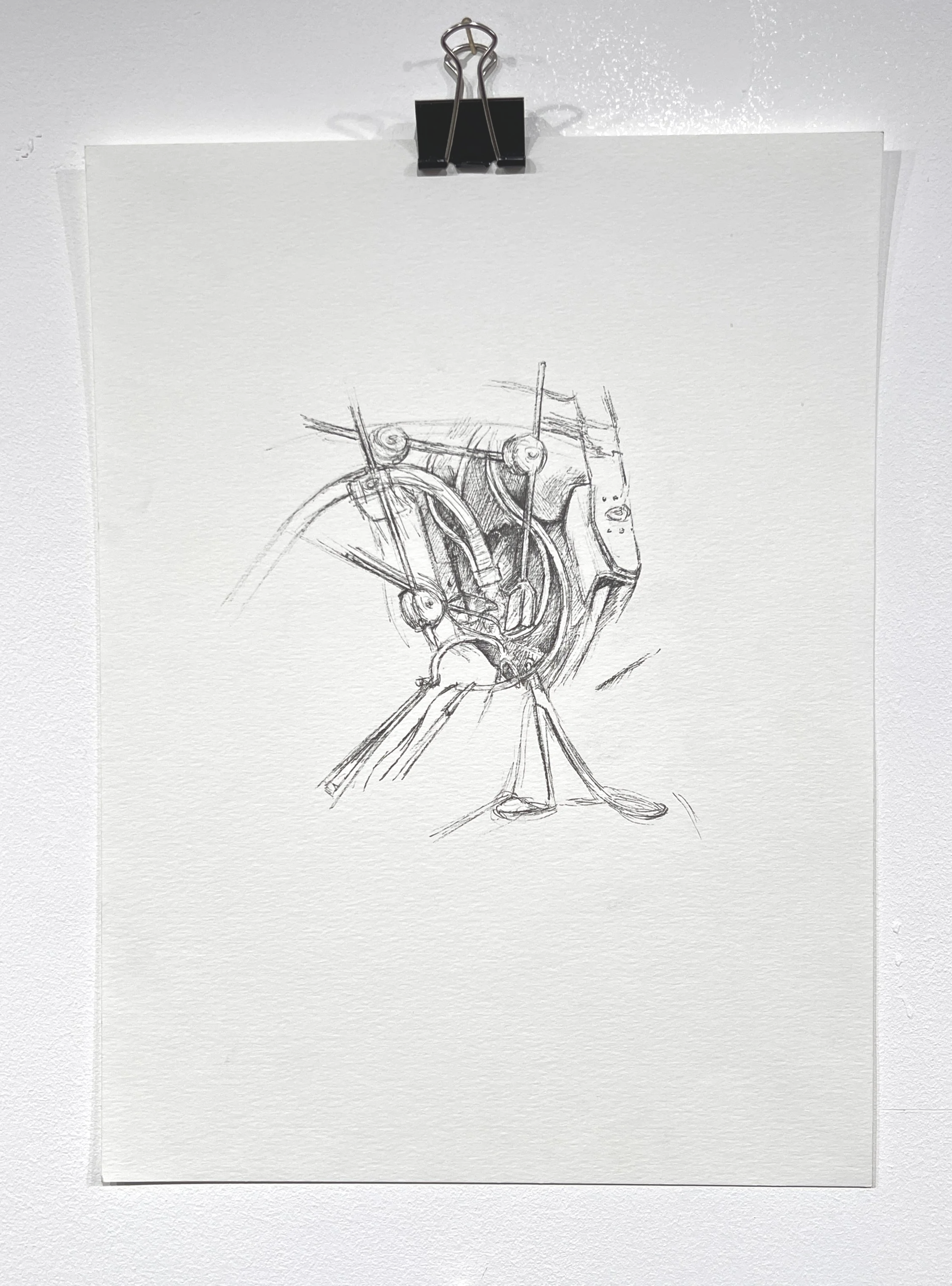
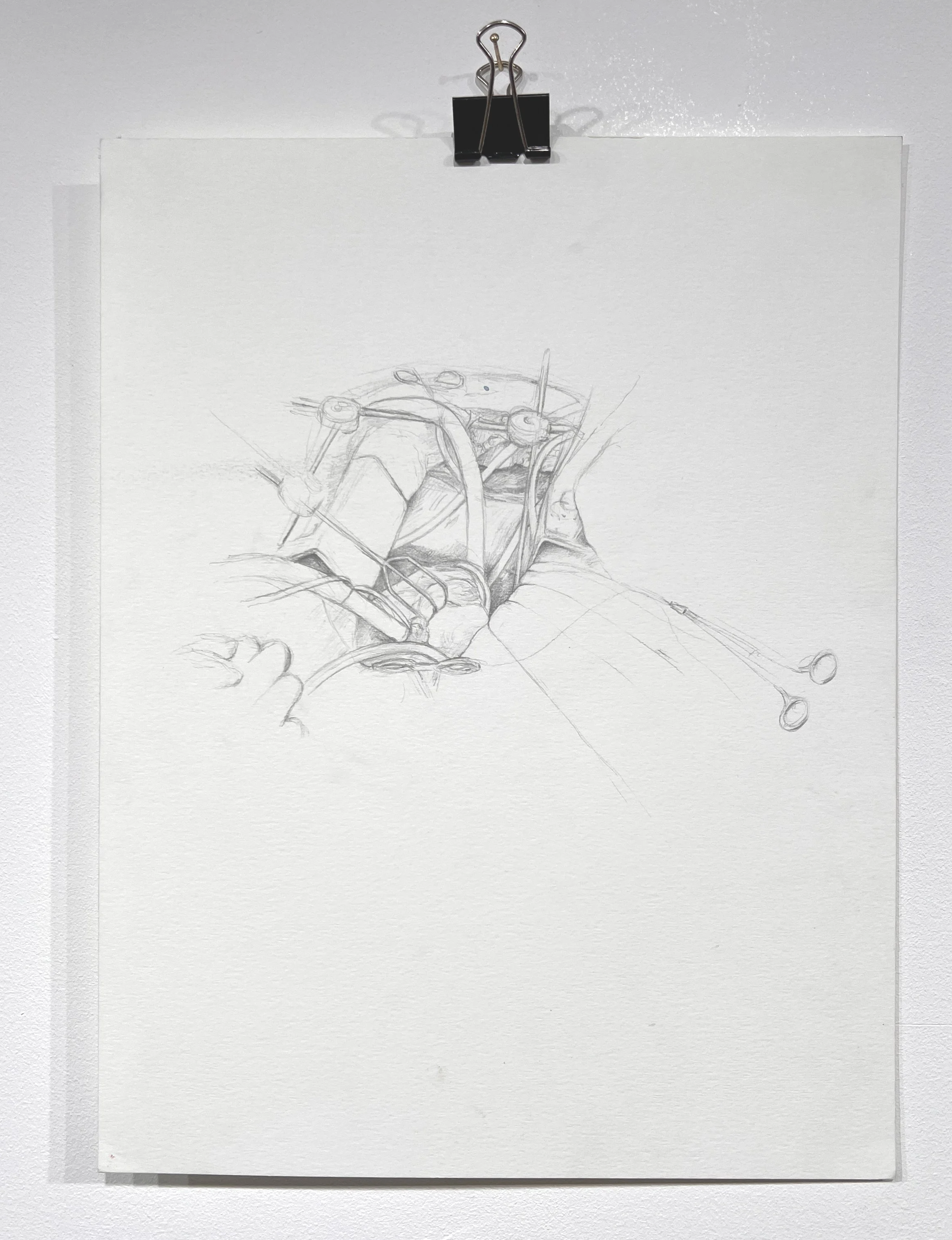
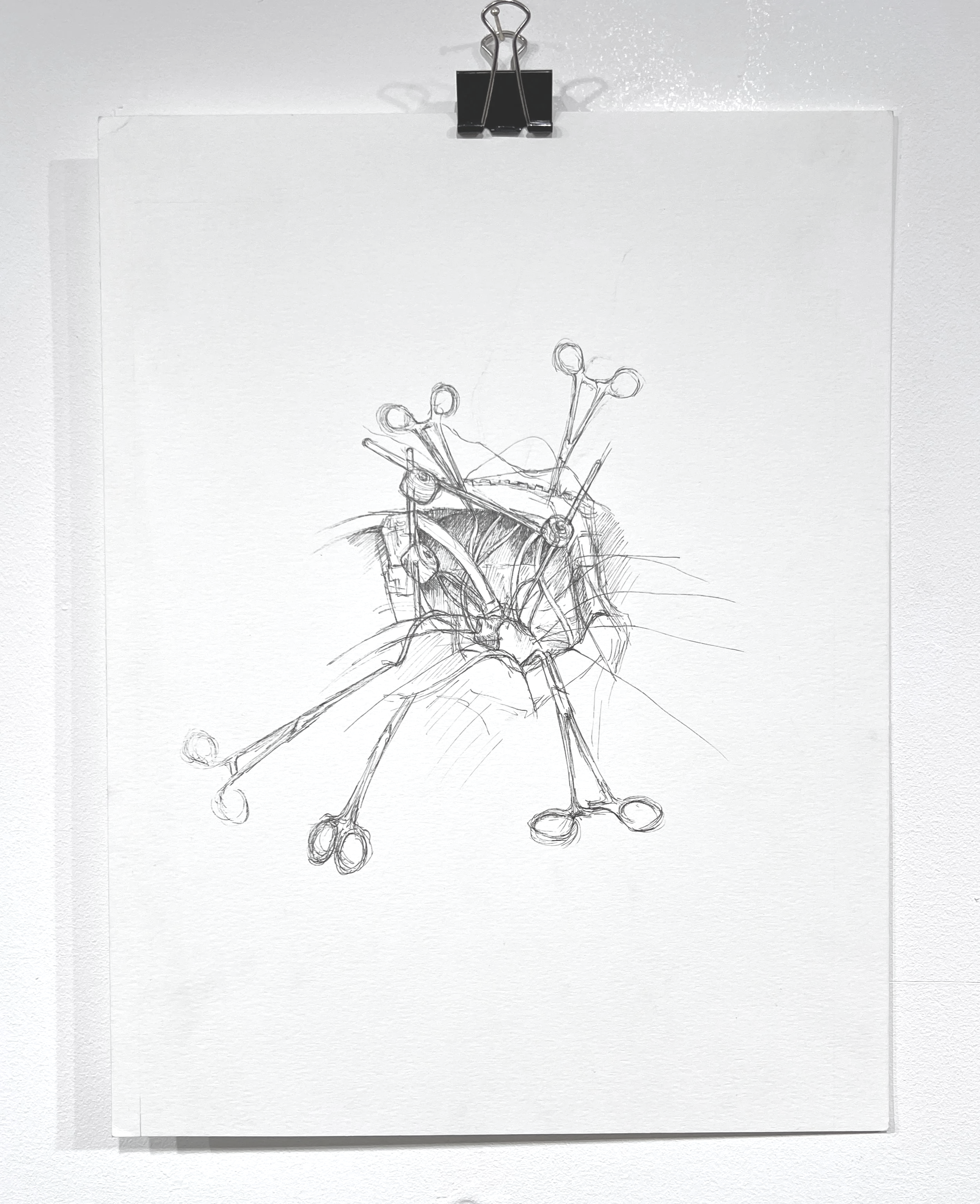
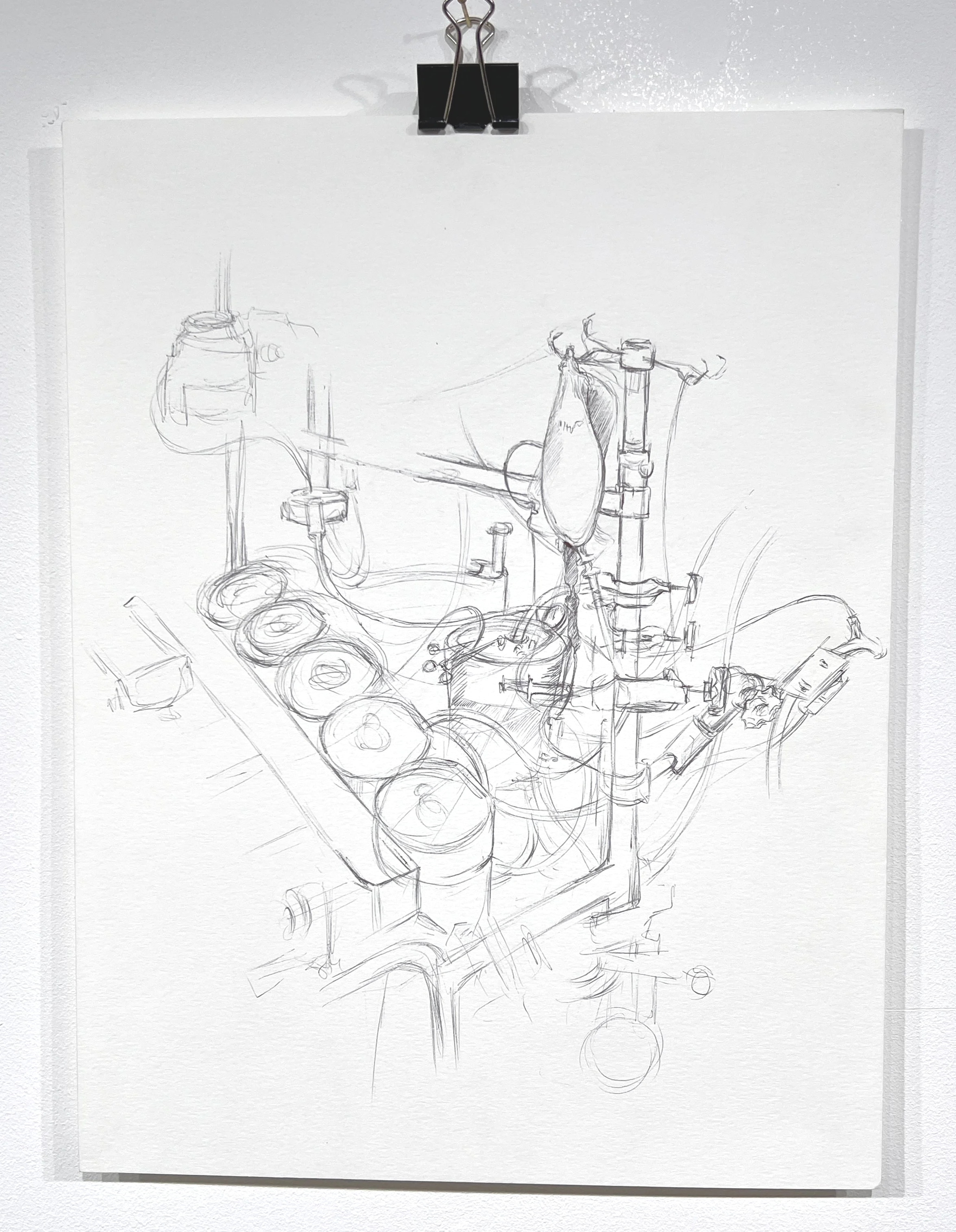
Stepping close, I saw inside the opened chest and within it the heart. The sight was breathtaking. Over my residency I made hundreds of drawings in the operating theatre; standing back and drawing the surgical team working together in intense focus then coming close and drawing the elaborate detail of clamps, threads and scissors working on the heart. I also drew hundreds of hands, quickly, and learned the lexicon of movements used by the surgical team. I was charmed by the gracefulness of the hand movements and touched by the careful way the surgical team worked together in such delicate collaboration.
Being in the room while making the drawings gave them a sense of immediacy that could not have been achieved if I had been watching through glass or on film. It gives a sense of each drawing being planted in a specific moment in time. The paintings made later, in the studio, built on the discoveries I made in doing the drawings, adding in the distinct lighting and consequent clear colours of the operating theatre.
Displaying some of the drawings at an open studio, I found viewers who identified as ‘too squeamish’ to see photos or videos of surgery could engage with the beauty of the drawings and interest themselves in the harmony and detail of the scene. It gave them a way to talk about the subject of surgery in a fearless way.
I was asked sometimes if the residency made me want to train as a medical artist, a specific discipline that is primarily about technical detail that informs medical practice. In answer, I found from this residency that I was interested in public engagement with both science and medicine, which later developed in other science and hospital artist residencies. But above all, I began to feel that as artists we open a view to experiences and scenes that are extraordinary and act as intermediaries, facilitators between those scenes and the people who view our work.
My artist residency was an extraordinary experience and I will be forever grateful to cardio thoracic Francis Wells FRCS with whom I worked and to Papworth Hospital.
Drawing in Real Time - Immediacy and Energy
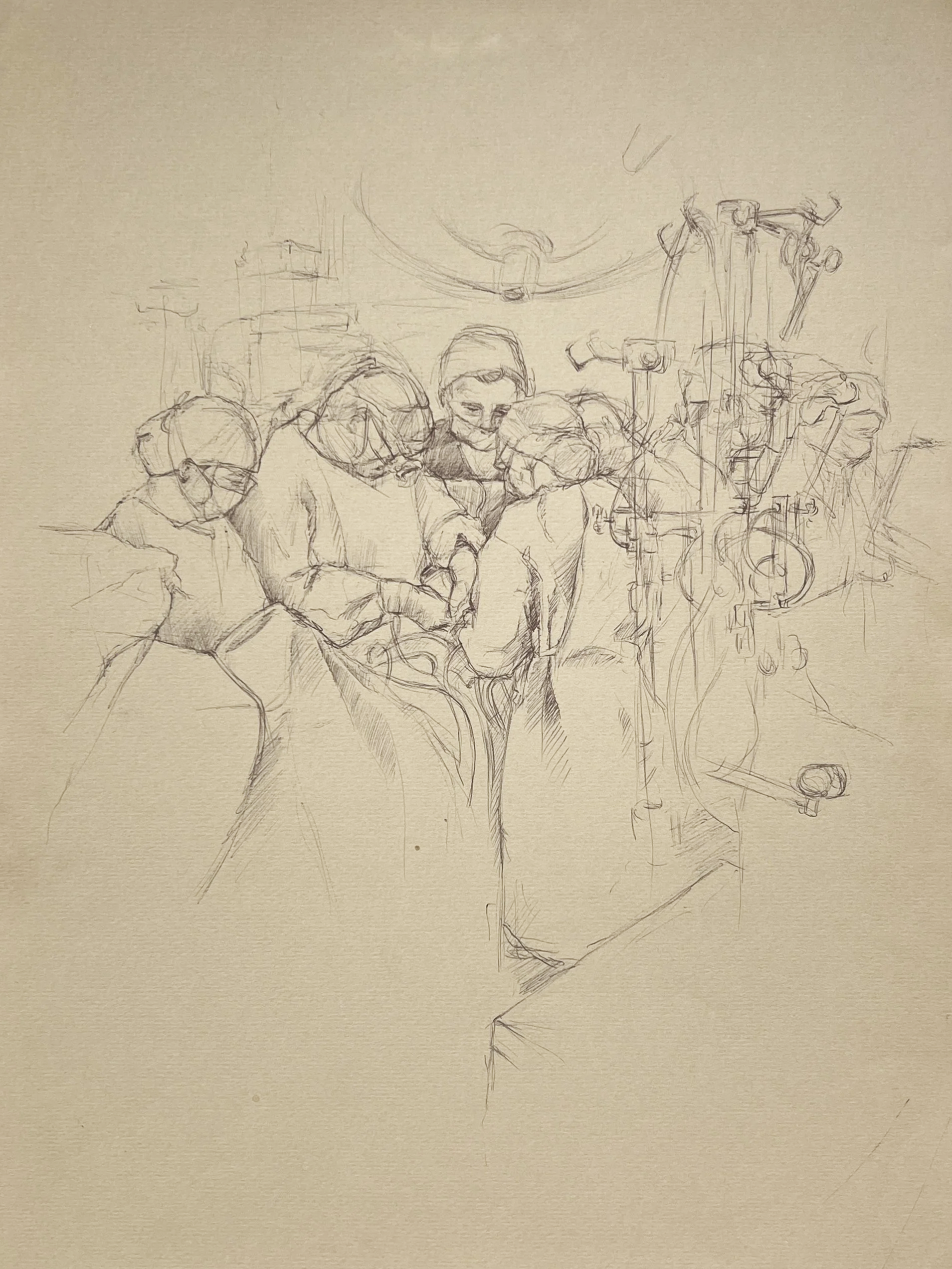
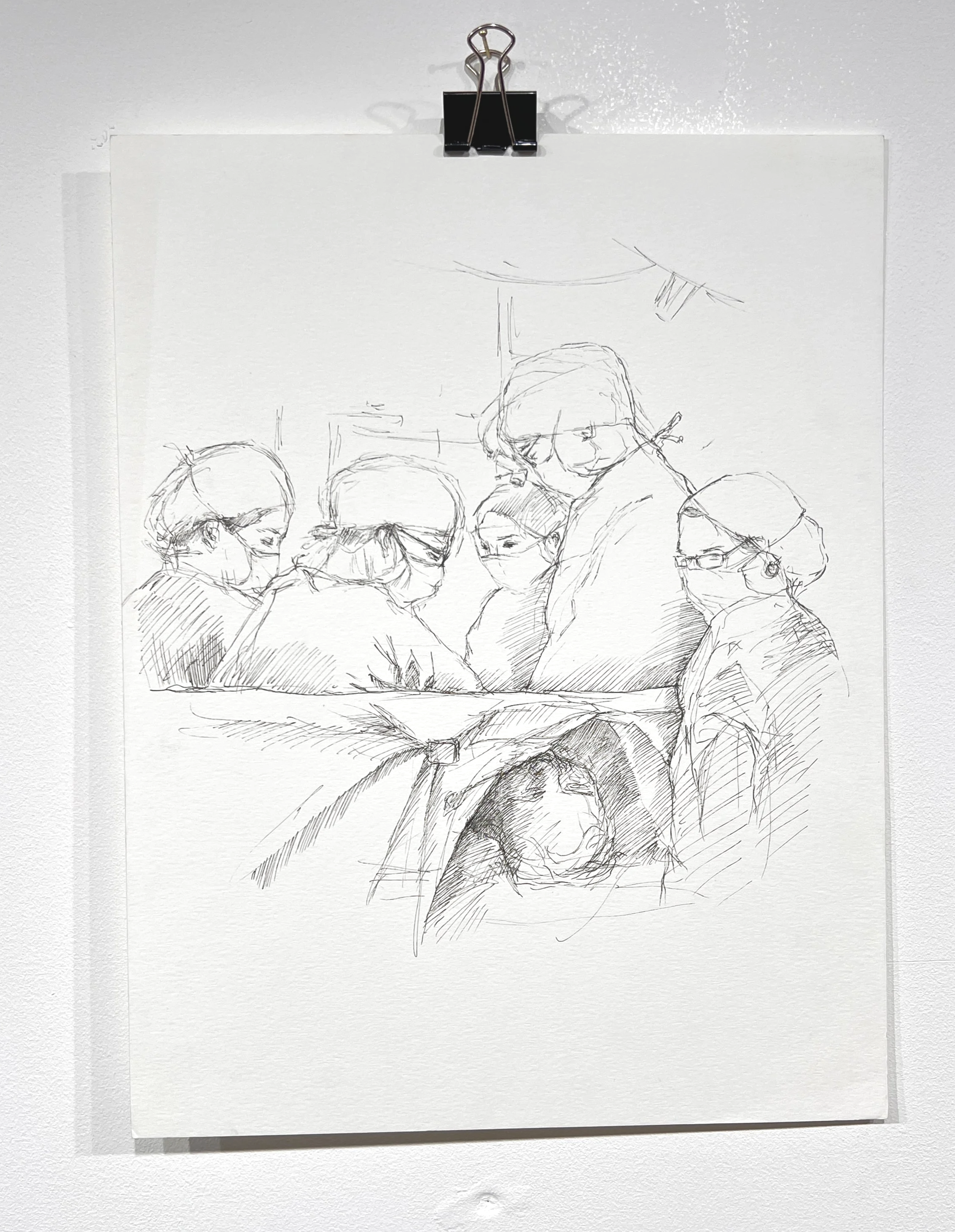
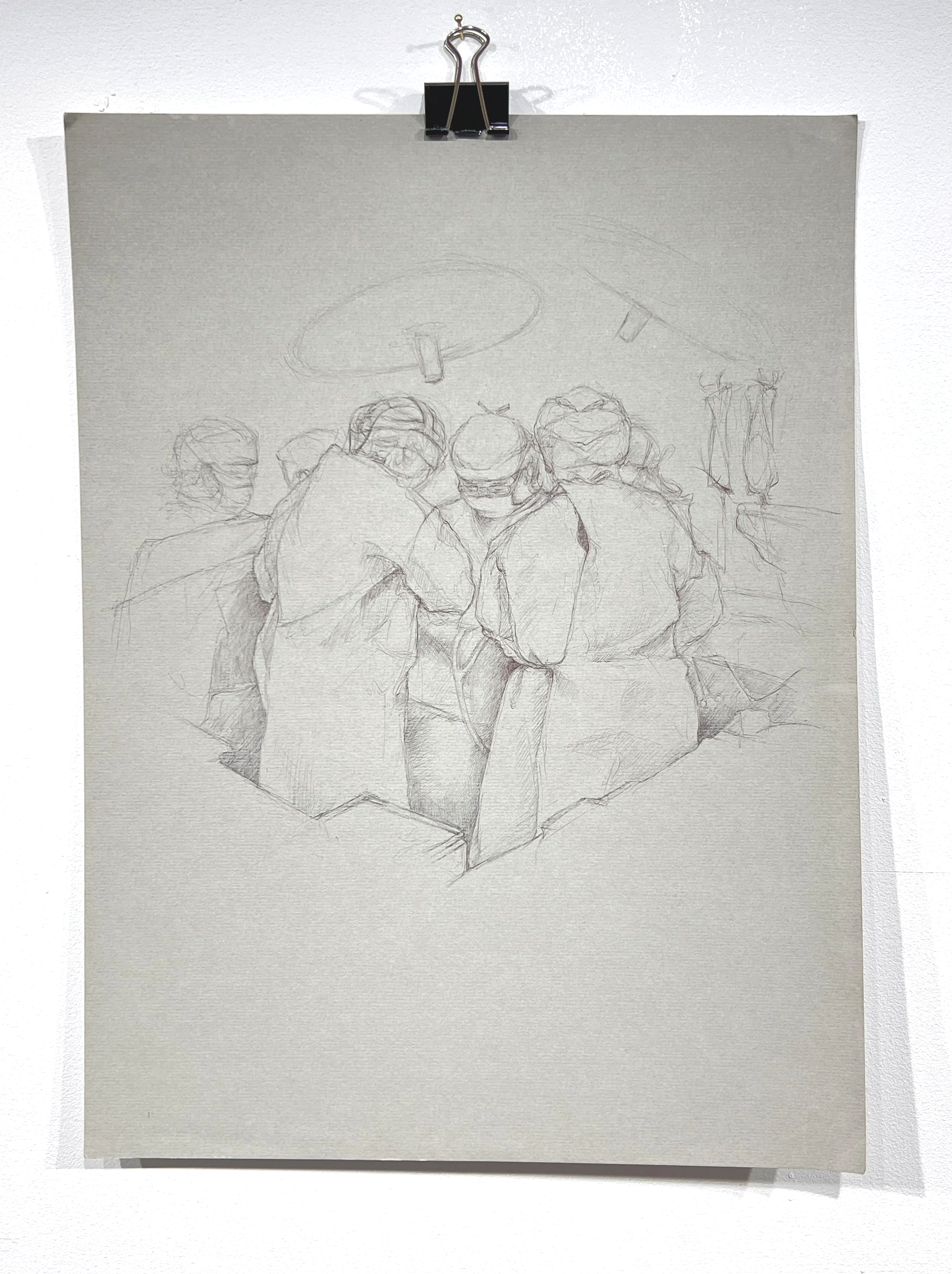
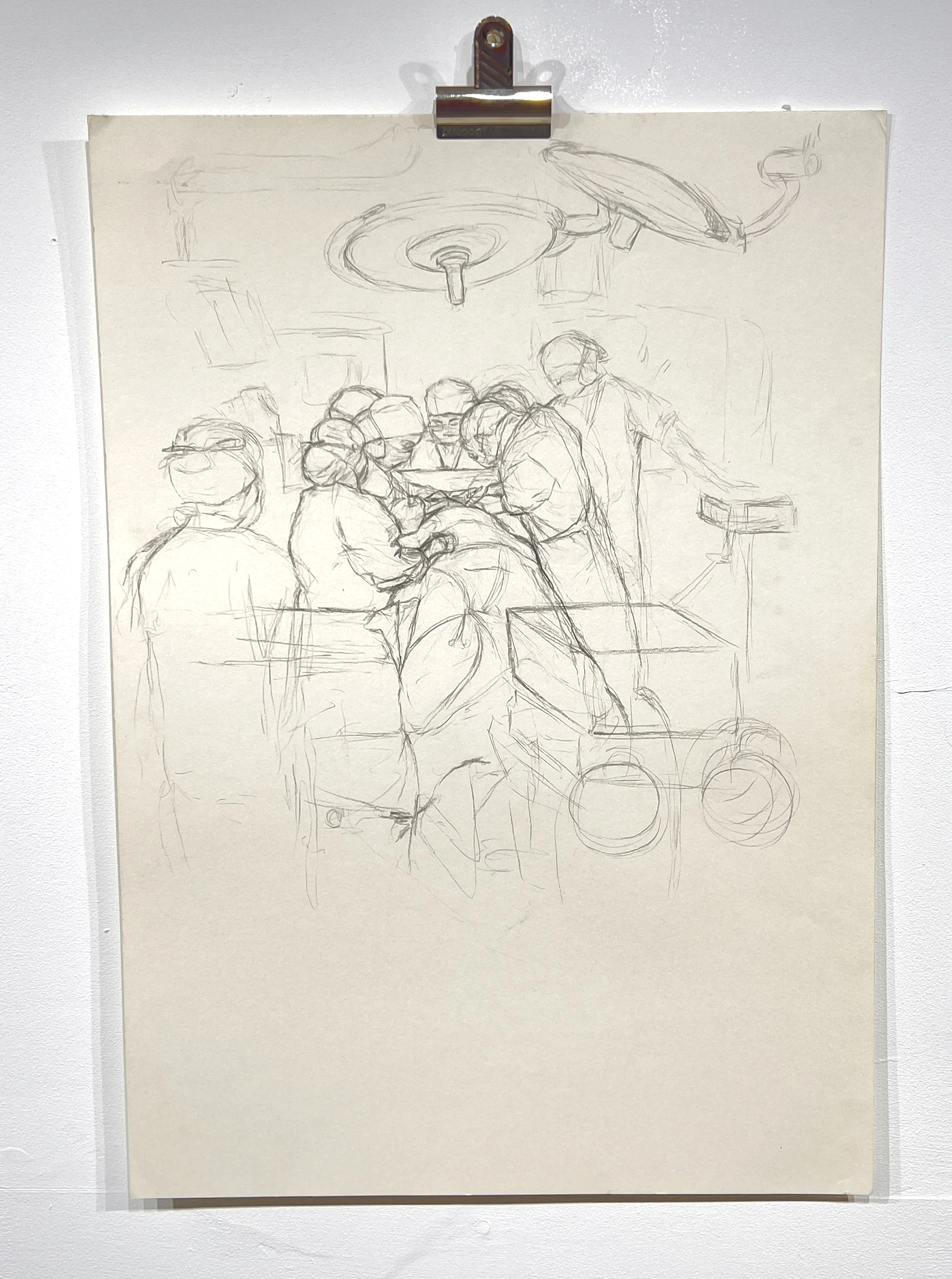
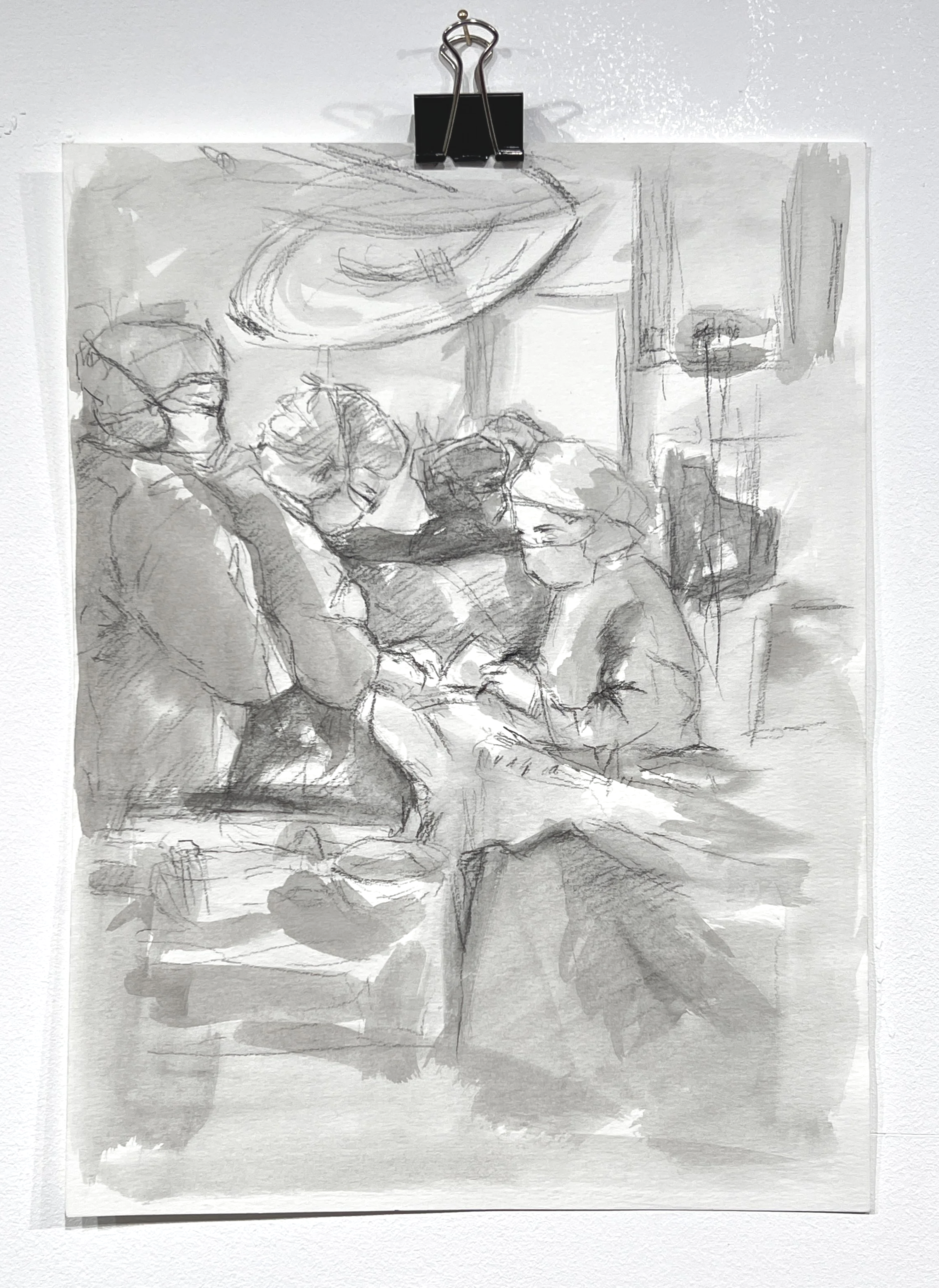
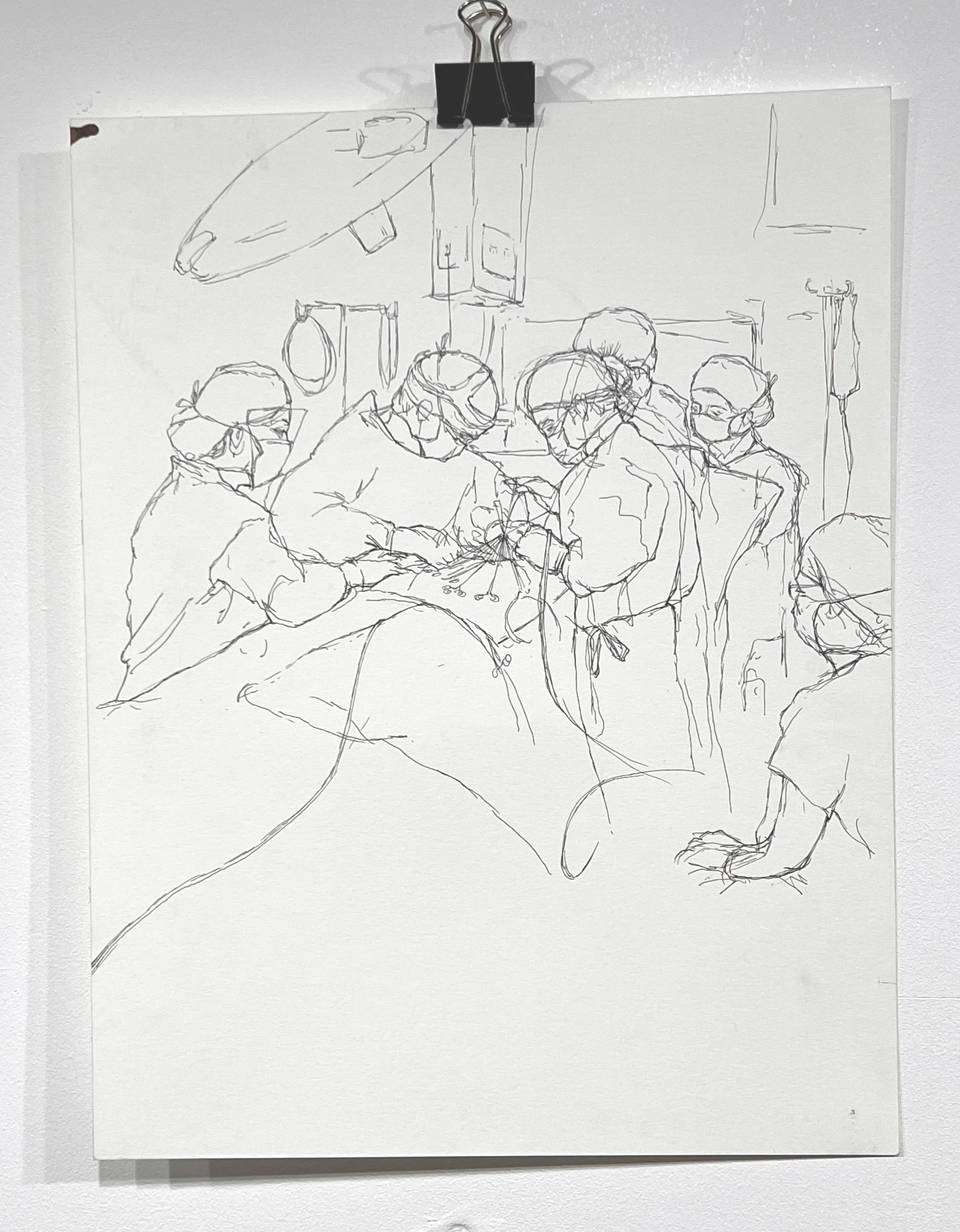
Surgical group including surgeons, scrub nurses, anaesthetists and perfusionist. Biro on stone-coloured paper
When I look back at the surgery drawings, they have a sense of immediacy and vitality that is unique to drawing from life, made with no time to second guess or over-finesse the work.
I had learned the elements of musculature and bone structure in the life room at art school, obsessively making hundreds of life drawings to establish my level of proficiency, and would look out for certain muscles that would only become obvious in certain positions. My go-to book was Sarah Simblet’s ‘Anatomy for the Artist’, a book I was given that overlaid photographed figures with transparencies depicting their underlying structures. I had been awarded the Sir Roger de Grey life drawing prize for a selection of the drawings I made in the art school life room.
There is a curious contrast in theatre, that there is a quietness, a workmanlike focus during surgery but that the the object of their focus is the human heart opened in front of them. In the urgency of working quickly to capture a particular scene, I could sometimes half-forget this and felt a sort of shock when the knowledge came back to me, perhaps from seeing an inanimate hand from under the drape or watching the anaesthetist adjust the scope in the patient’s mouth. Being in the room kept that realisation present and vital.
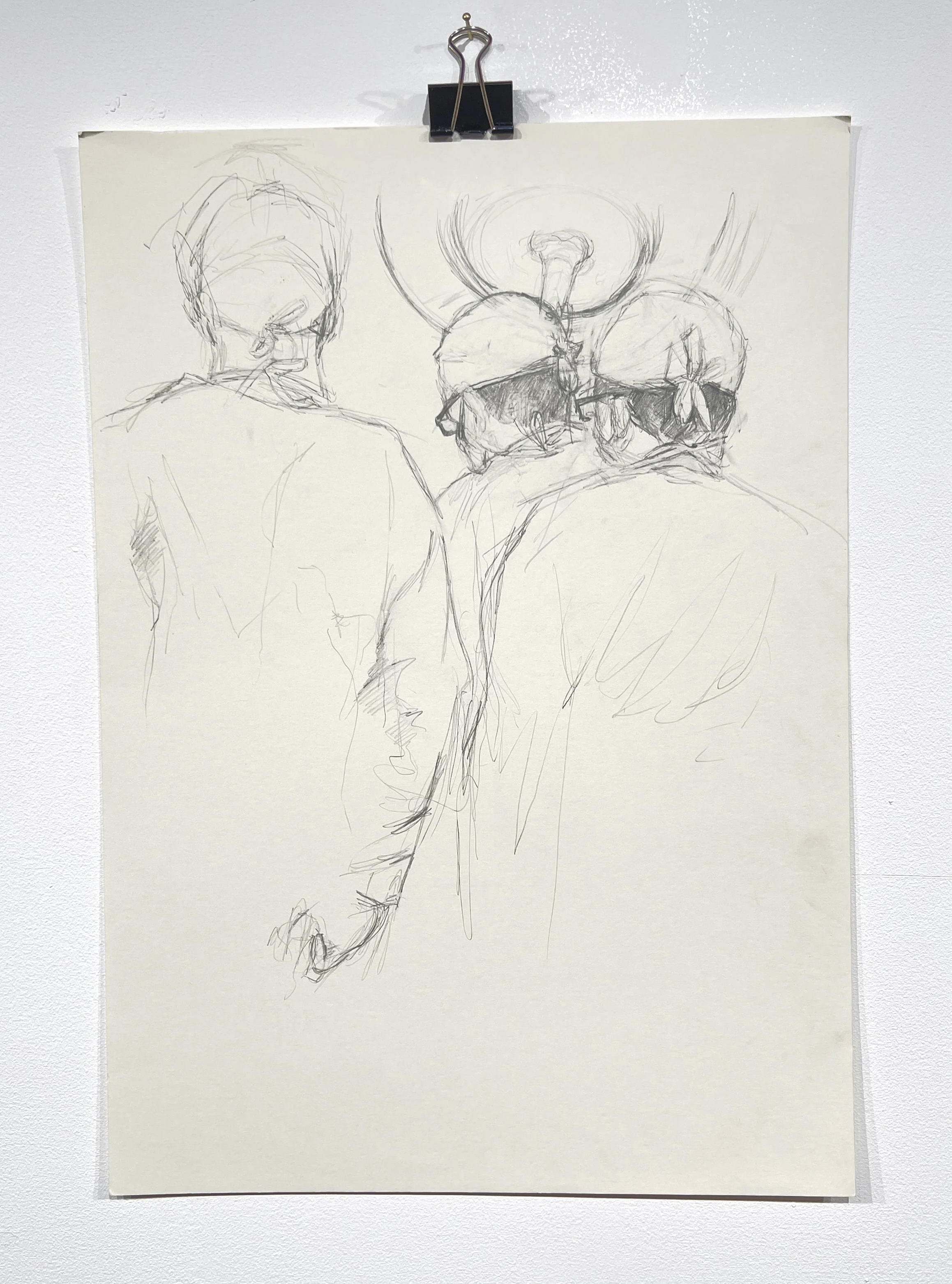
The surgical team worked quietly, confidently. Their bodies would often be poised in focused attitudes during the most delicate work, such as lowering in a replacement mitral valve or suturing it in. These prolonged poses gave me valuable time to record the position of their backs, heads and limbs, if I worked quickly enough. The more I saw, the more quickly I could anticipate those periods and the particular angles. The greater challenge was to capture the movements of the hands dextrously adjusting clamps, threads and manipulating a seemingly endless numbers of scissors…
Dexterity and the Lexicon of Gestures
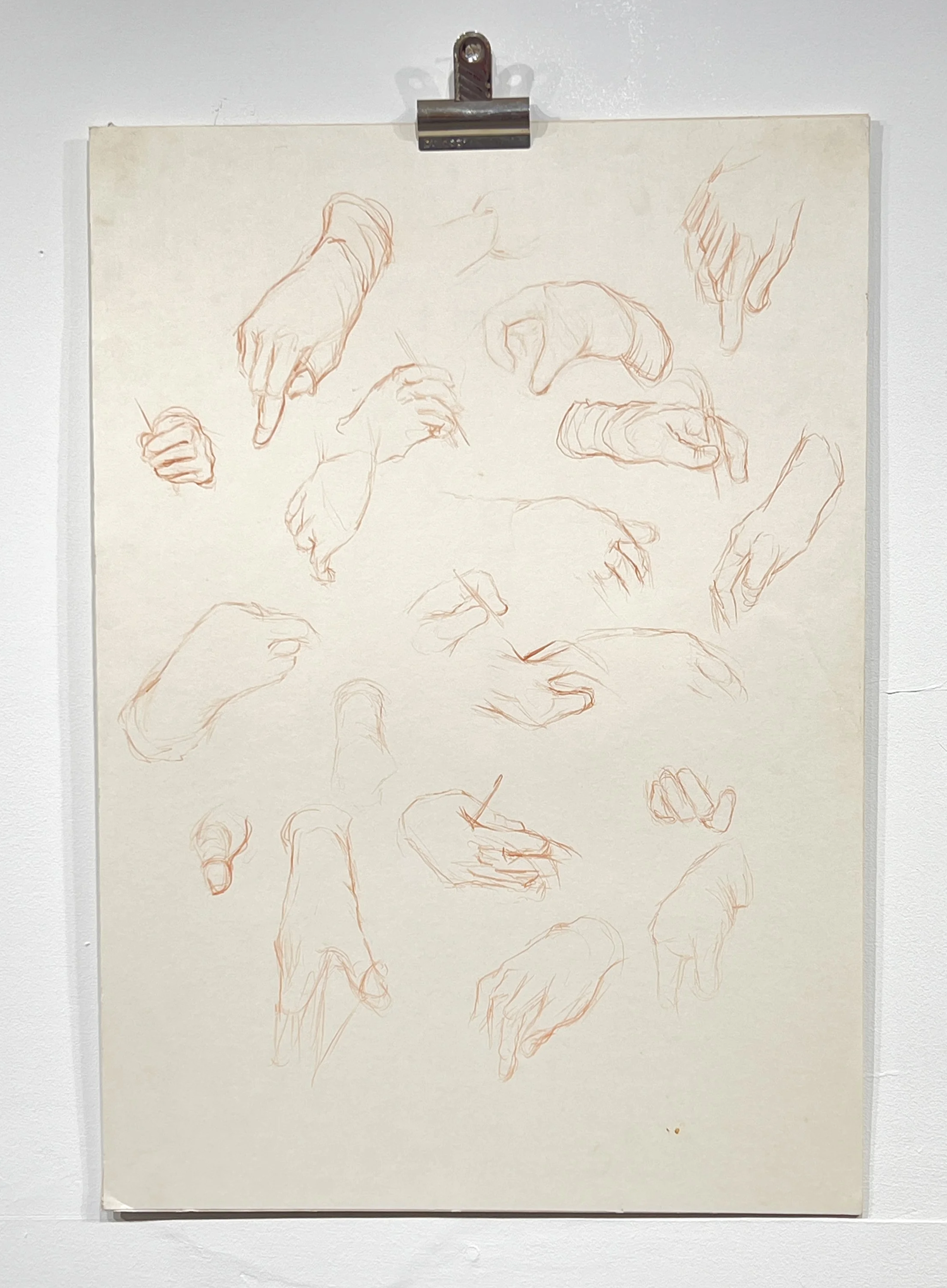
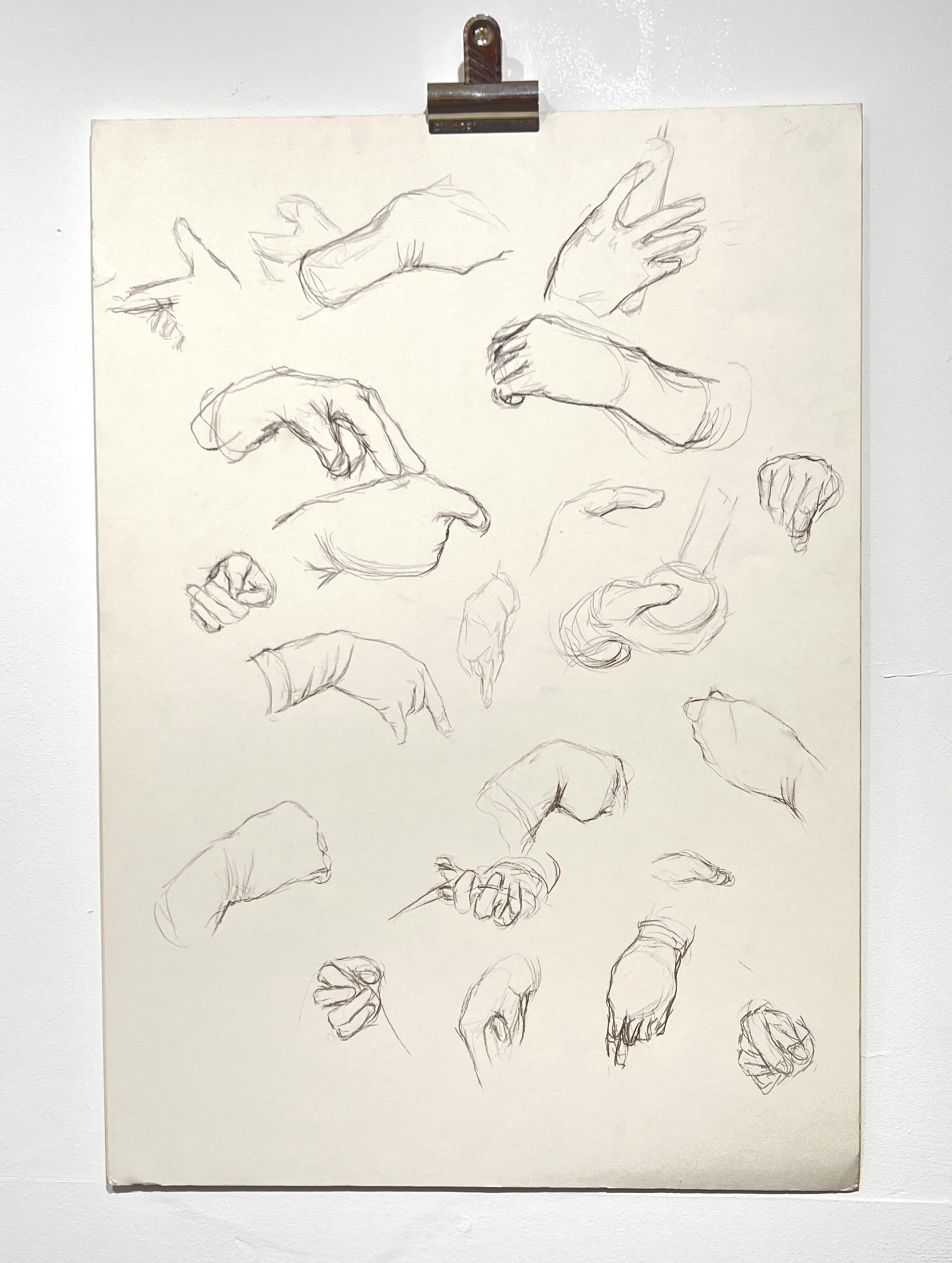
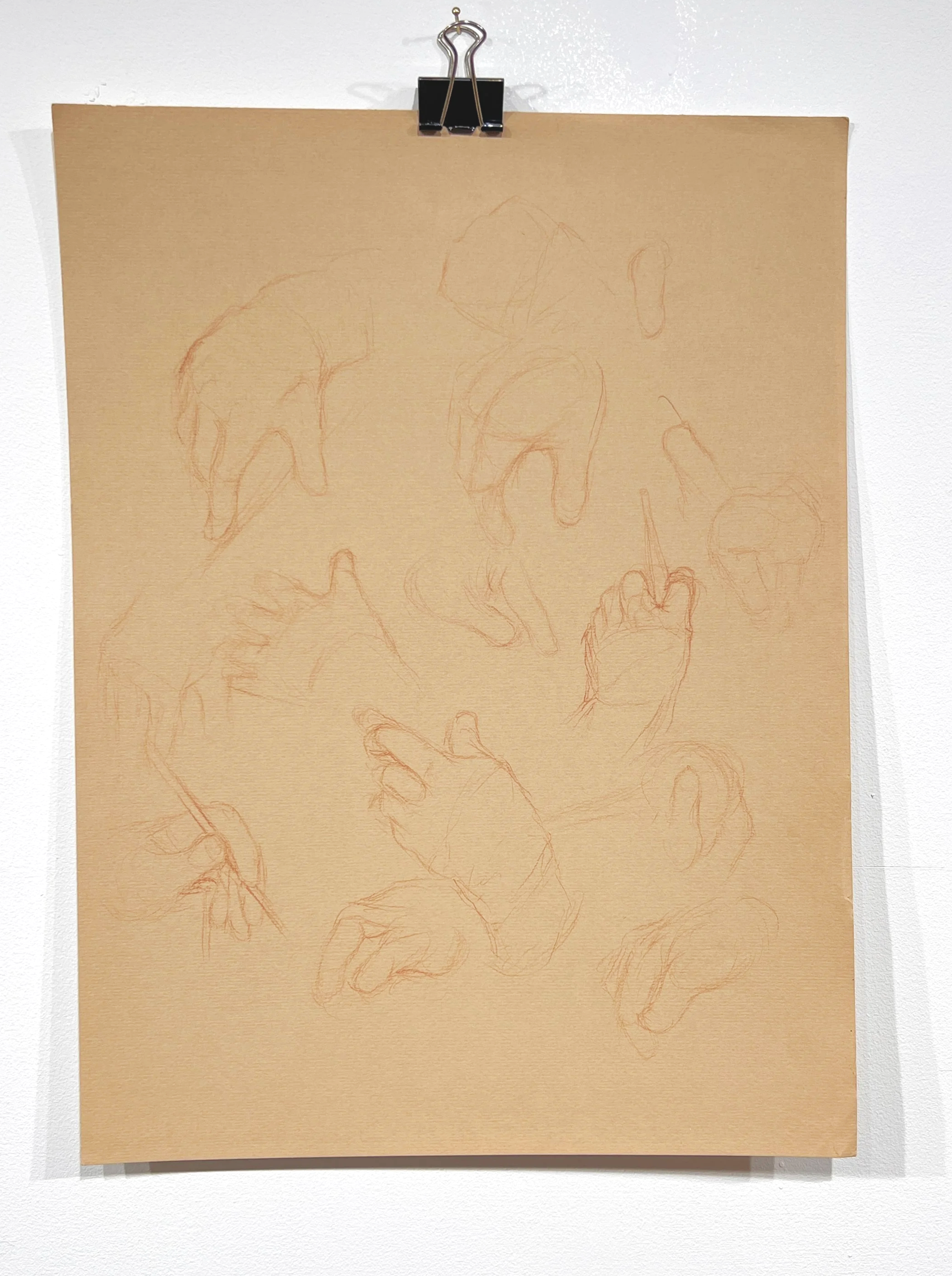
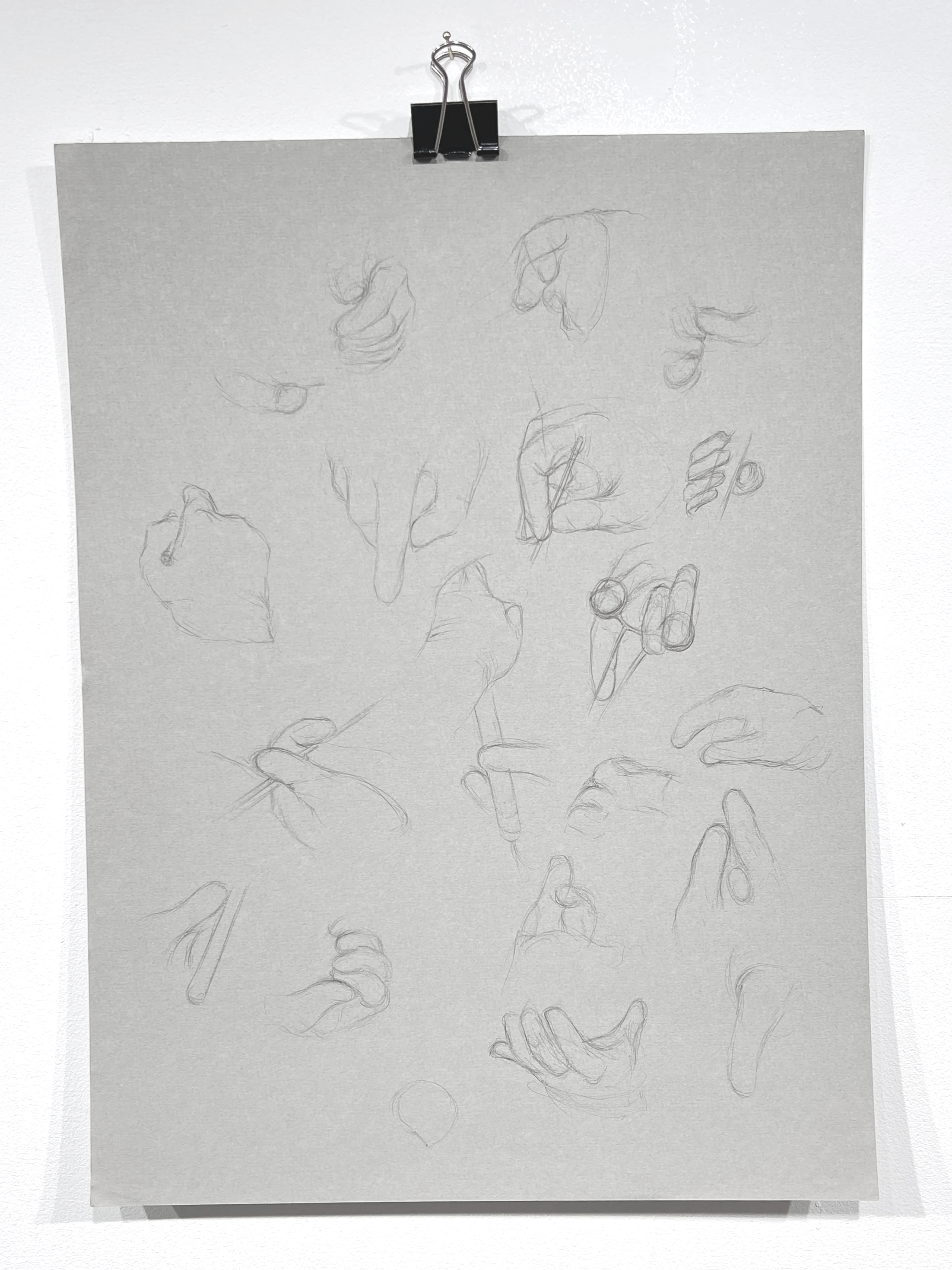
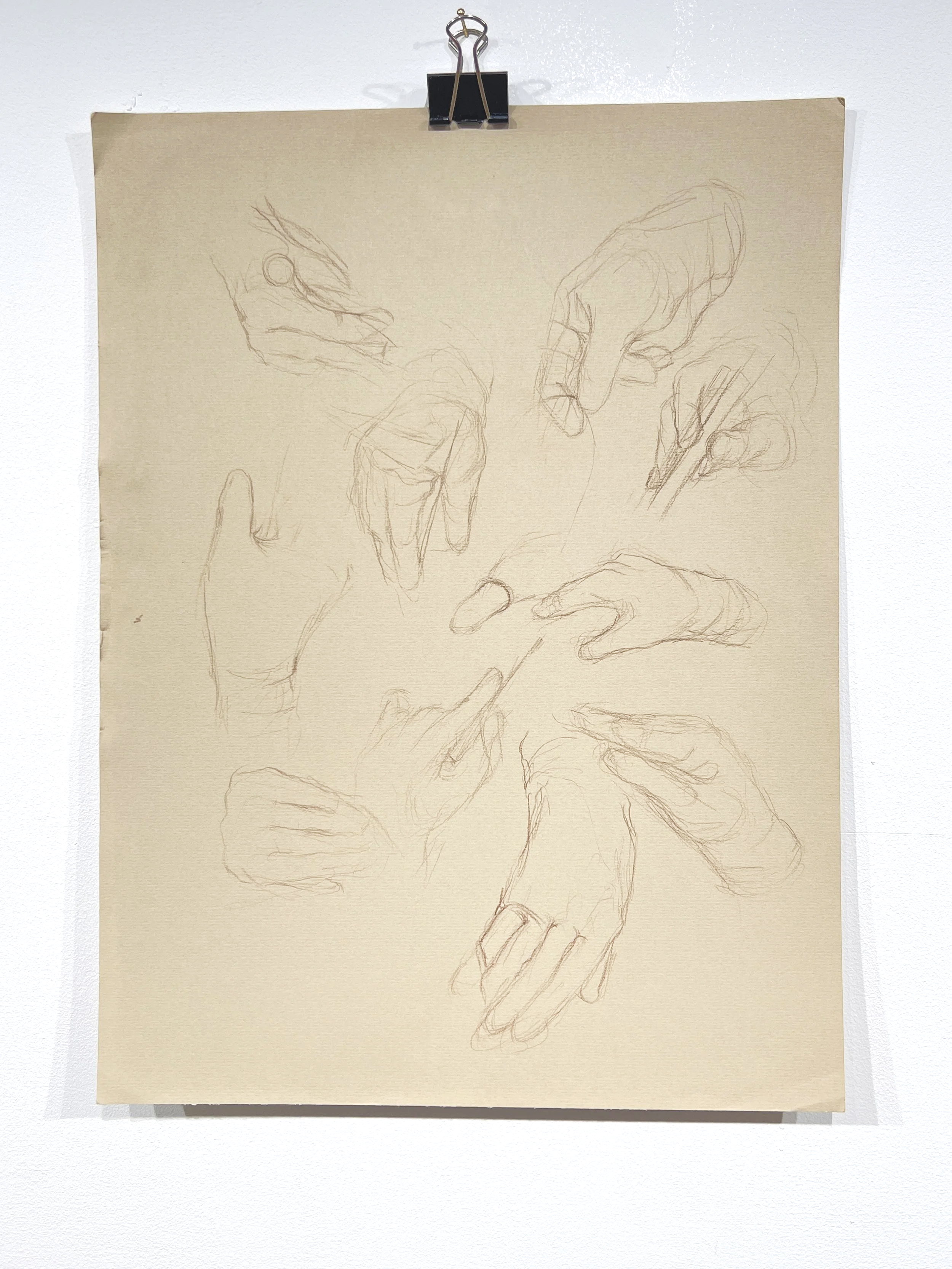
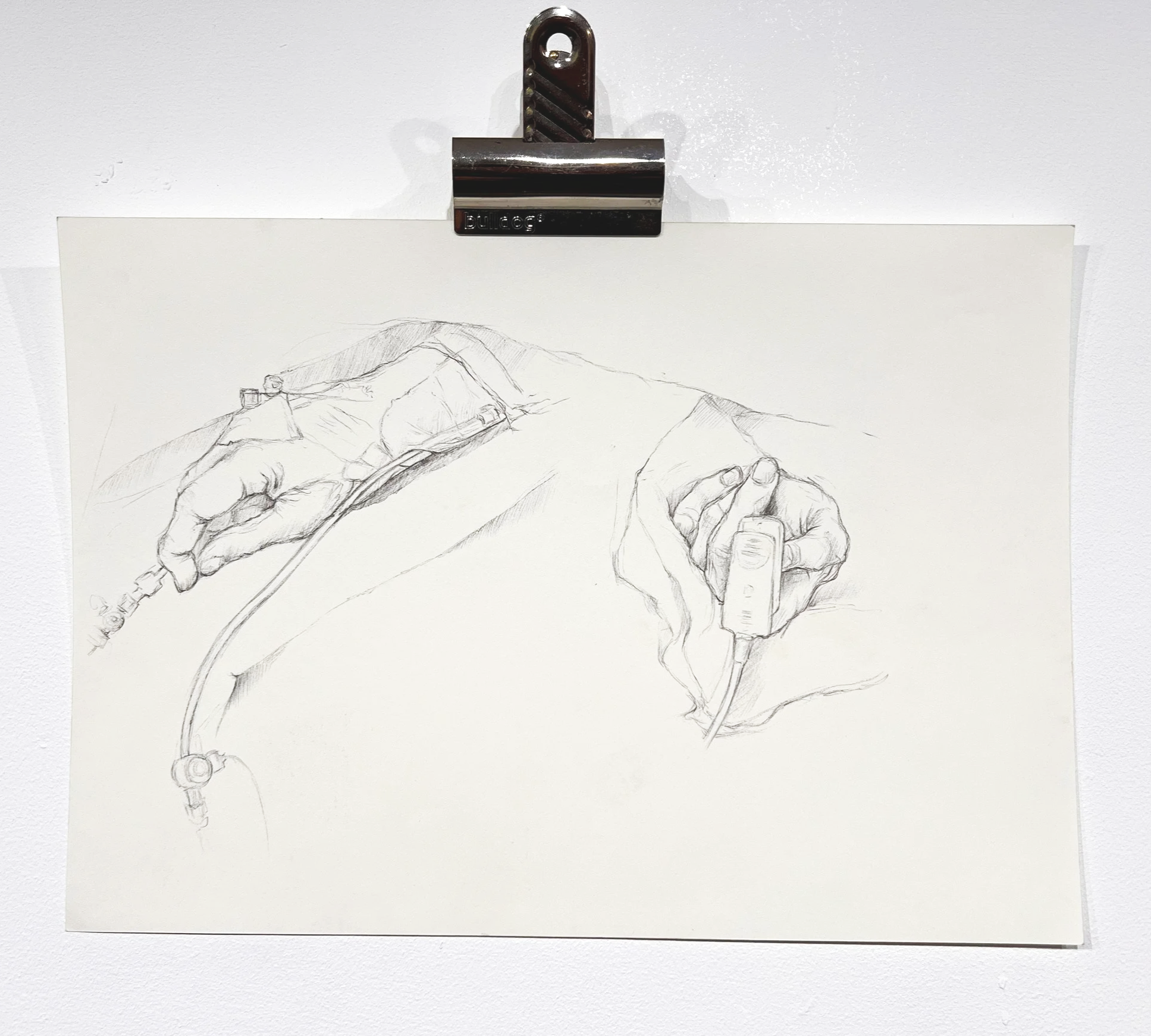
Over my residency I drew hundreds of hands, working very rapidly, and learned the lexicon of movements used by the surgical team, making it possible to anticipate the angle and shape of each part of the hand as it gripped the familiar tools, repeating a series of specific gestures again and again. I was charmed by the gracefulness of the many hands working together; the sheets filled with hands in different attitudes are a particular joy to me when I look back at them.
There is a commonality between surgical workers and artists, a very analogue facility with our specialist tools and a muscle memory acquired over thousands of hours. It leads to an acute understanding of how changes in angle, speed and pressure, as well as the subtle differences in tools used, can change the resulting marks. Repeated practice develops into intuition and nimbleness becomes a joyful achievement.
I had a moment, more than once, when I felt my own hands holding my drawing implements to be a present echo of the subject hands gripping similar stylus-type tools whose likeness I was rendering.
When I work on a project, I research how other artists have approached the subject. While doing this residency, I looked at paintings of groups of figures, chiaroscuro light handling and the shapes of hands. Barbara Hepworth’s surgery drawings were of particular interest to me in this period and the way that she chose to represent hands in surgical gloves expressed, to me, a graceful lyricism.
Moving Together - the Ergonomics of Many Bodies in a Small Space
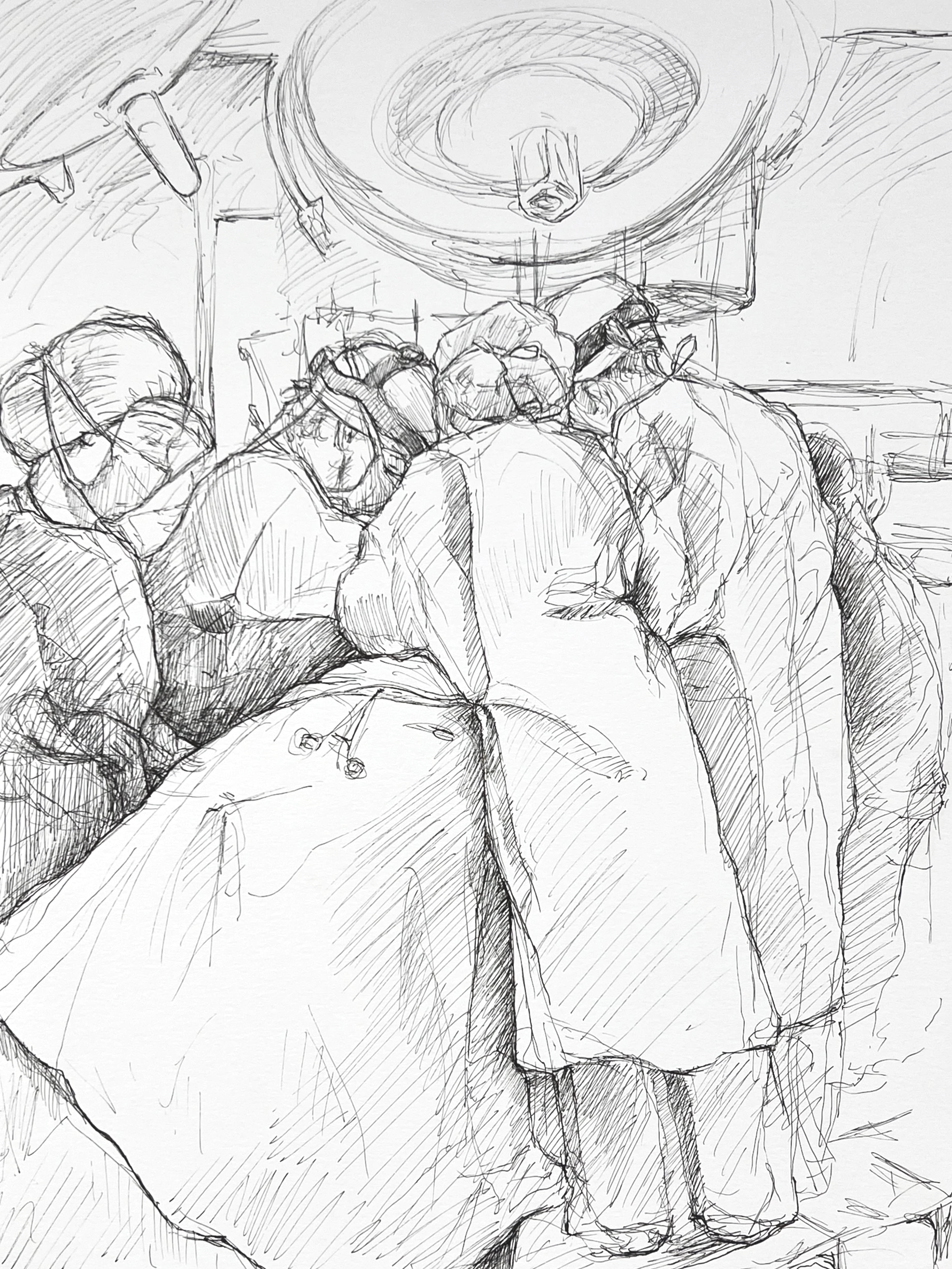
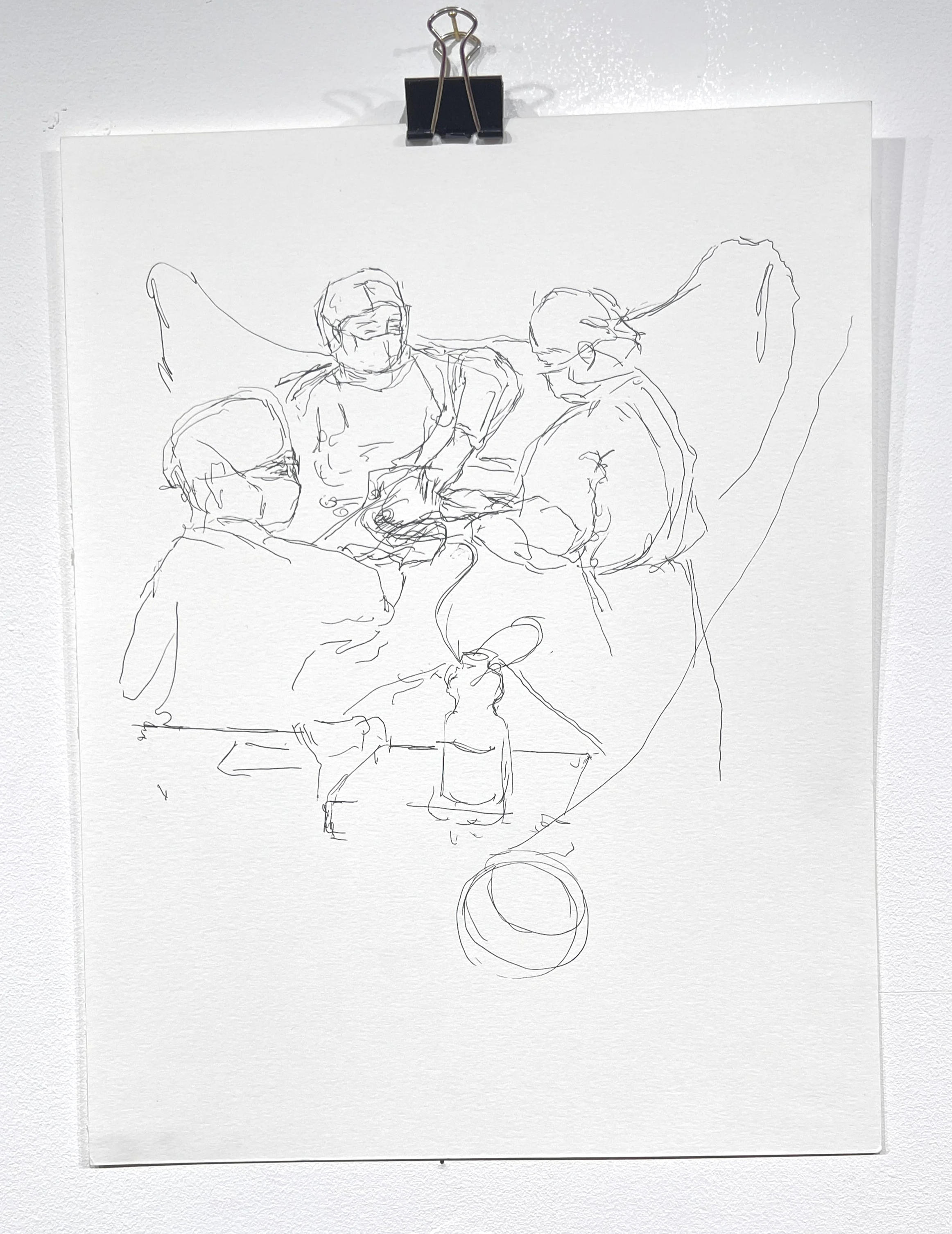
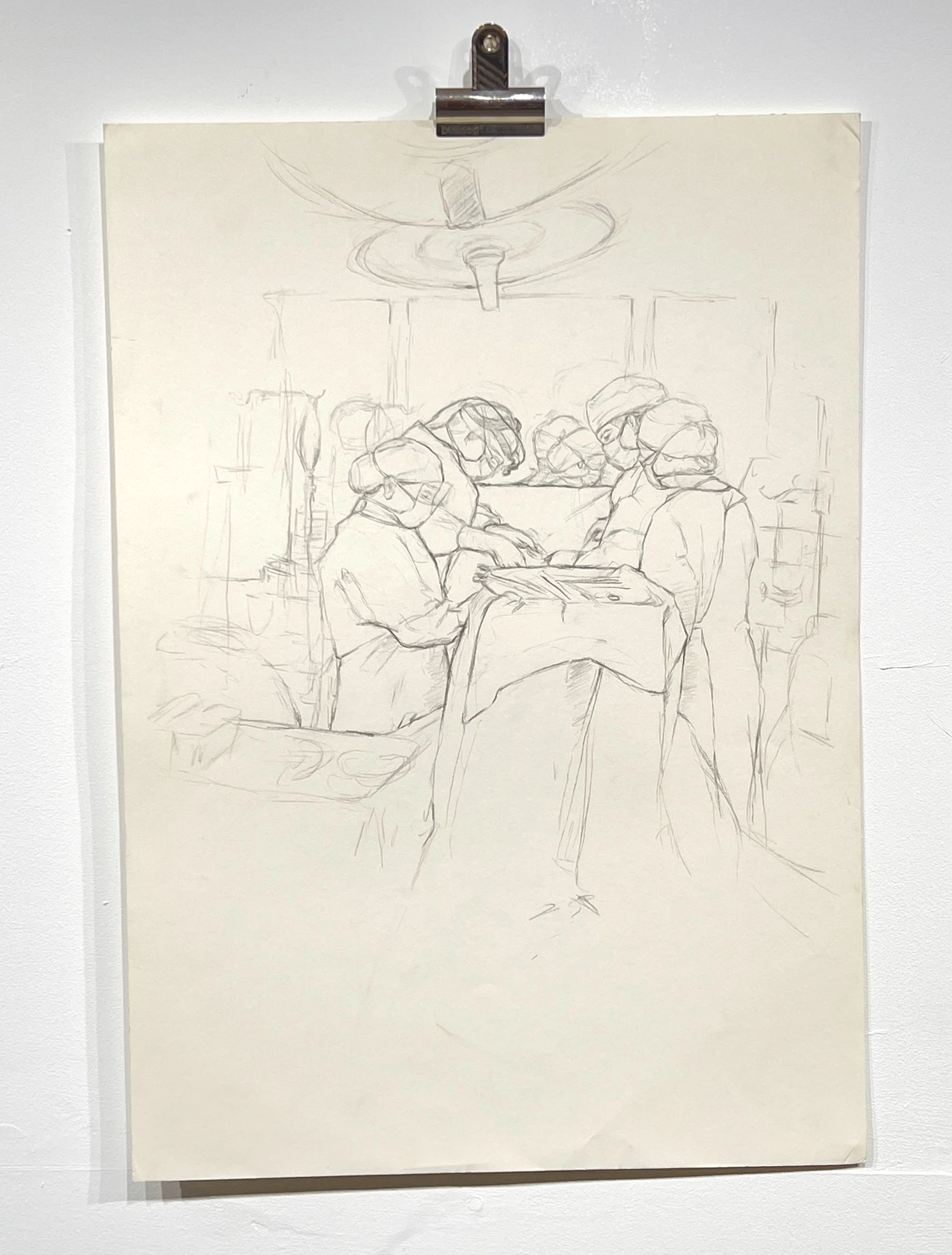
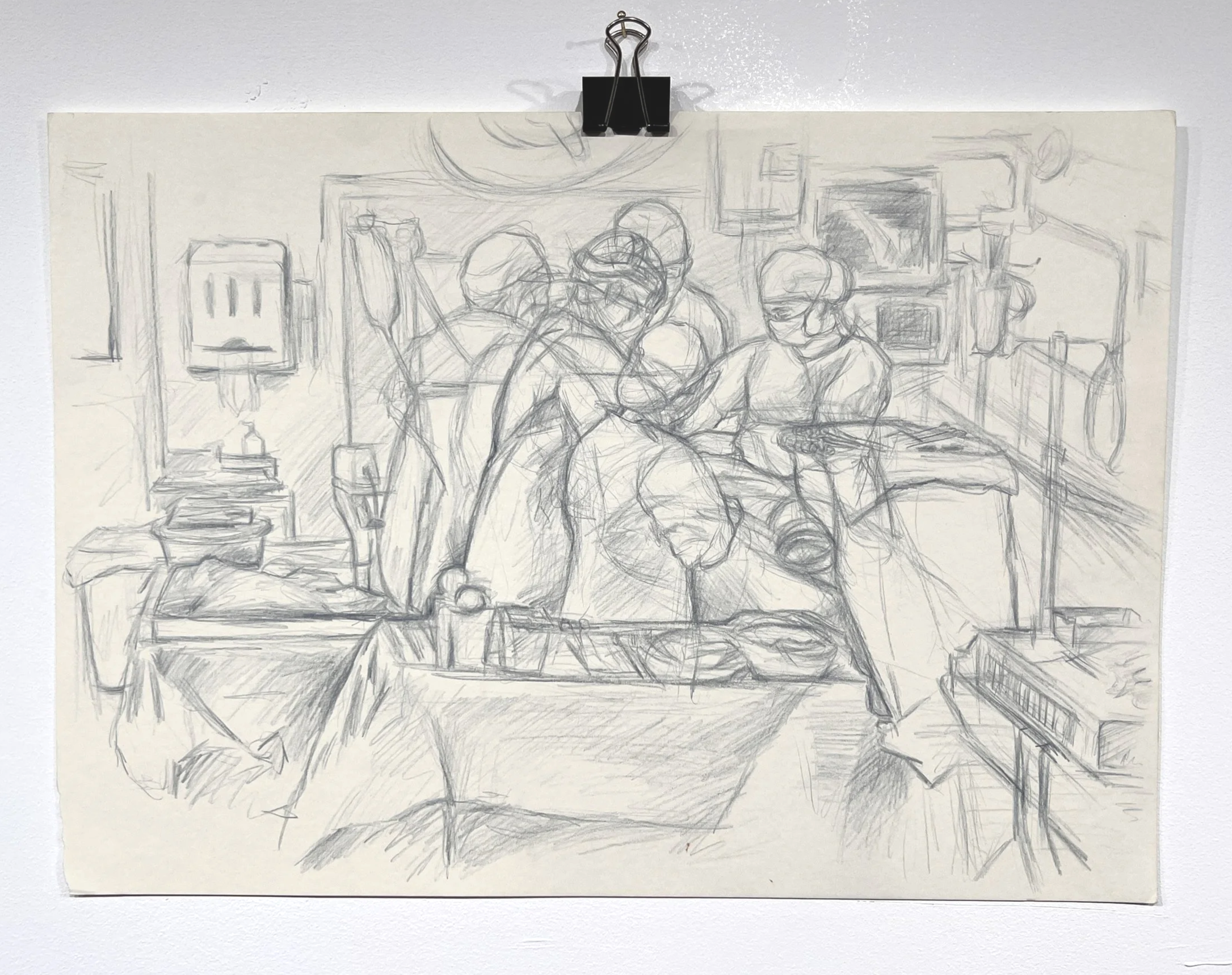
The surgical team working together. The scrub nurse stands on a stool two keep height with the surgeon. To the right of the image, the anaesthetist is seated, monitoring the patient by their head. Pen on paper
I looked at many classical paintings of figure groups as research during this residency. One composition that came up many times was The Incredulity of St Thomas, a theme worked by many artists in classical painting in which a group of figures are clustered around the figure of Christ and St Thomas places his figure into the wound in Christ’s side. A particular favourite is the version by Caravaggio in the National Gallery in London, which had first struck me because of its pared down composition, the interplay of the figures and its masterful use of chiaroscuro (the use of a strong contrast in light and dark which lends drama to a scene and renders the figures with enhanced three-dimensionality). In this painting, four figures come so close to each other, in intense concentration, that their heads are almost touching. The focus on an opening in the body lends the final touch to the similarity with the scenes of a surgical team working together.
Each time I saw the surgical team working together, I admired their collaboration. Working on one small locus of interest while being so physically close to their collaborators meant that each gesture had to do only what was needed to make the operation a success. Clarity and communication between them was essential. I could see the pragmatism of this but any time I stood back to draw the cluster of people, it was the composition that gave me the most pleasure. The beauty of those compositions was a lucky byproduct of a practical task.
I was asked once if they would often bump hands, with so many in one small spot. Thinking back, I rarely saw this happen. The head surgeon would direct the operation and I got the feeling that things went most smoothly when the people in theatre were habituated to each other’s way of working. In time I became used to certain phrases that would indicate a phase of the operation had been reached and a specific action would follow and I’m sure this sequence would prime each person to anticipate their next action.
A Glimpse Behind the Curtain - the Privilege of Insight
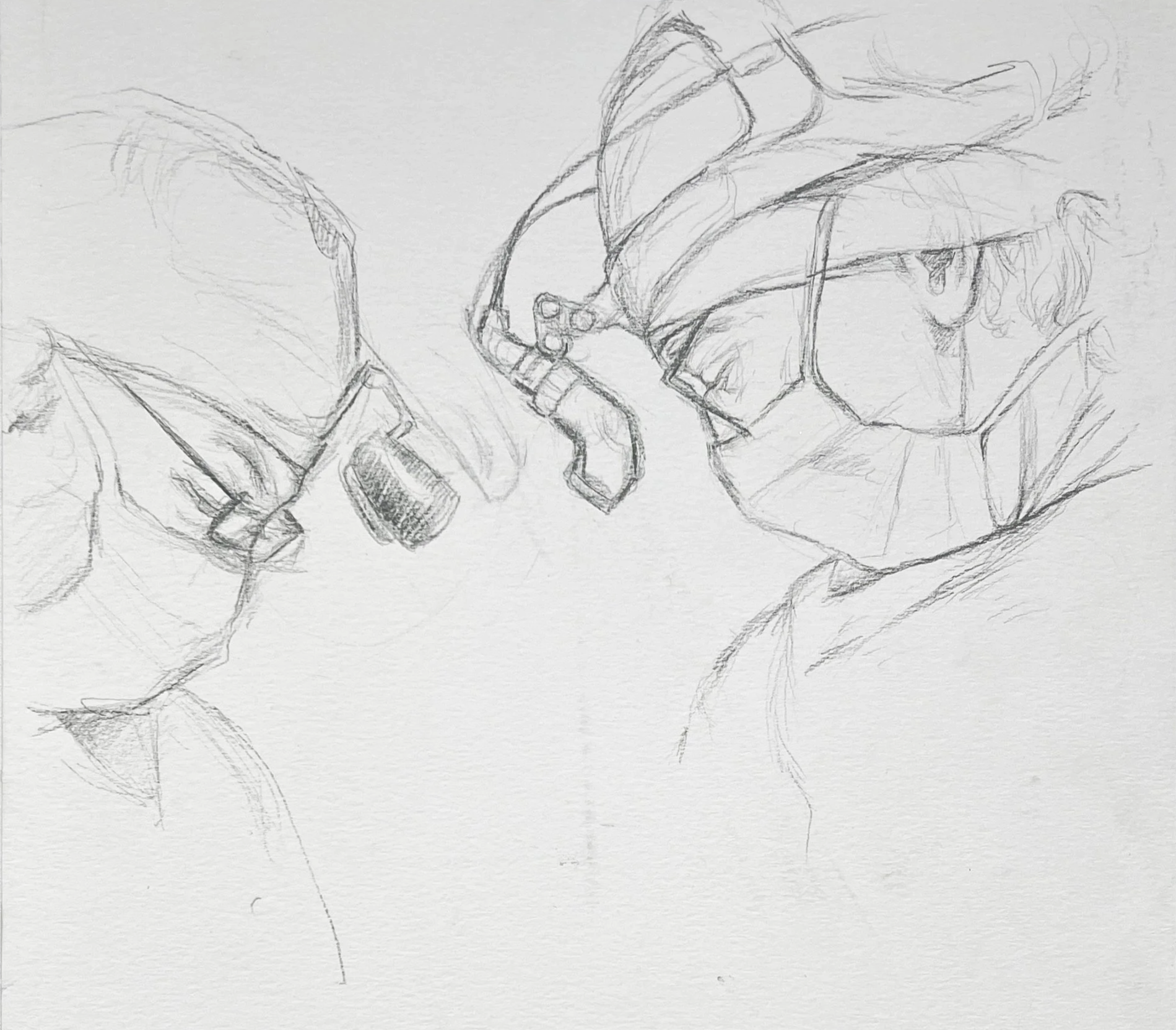
Surgeon and assistant surgeon working together. Pencil on paper
I was aware, always, that being in the operating theatre was a privilege. There are so many people in the room during open heart surgery and each person has their own set of tasks. To be an extra person in that room, I knew that I had to justify my presence. The residency came to be though a mutual connection with surgeon Francis Wells and I’ve often found as an artist that you get a privileged window on the things that interest you most.
In art school, I had been interested in science and medicine as a subject for art. Personal experience with hospitals as a patient made me unintimidated by medial environments and I think my facility with drawing figures, including the time-limited drawings exercises in the life room and consequent ability to work quickly from life, meant that the residency was perfect for me.
The reactions from the surgical team were varied, particularly at first. But I found many people engaged happily with what I was doing, happy to answer my questions in quiet moments and perhaps above all, that their actions and profession were being ‘seen’ and that they were pleased to have been chosen as a subject for Art. Over the course of my residency, I began to feel that through the work I made, I had justified my presence in this busy and important space.
Lighting the Way - the Unique Character of Light in the Operating Theatre
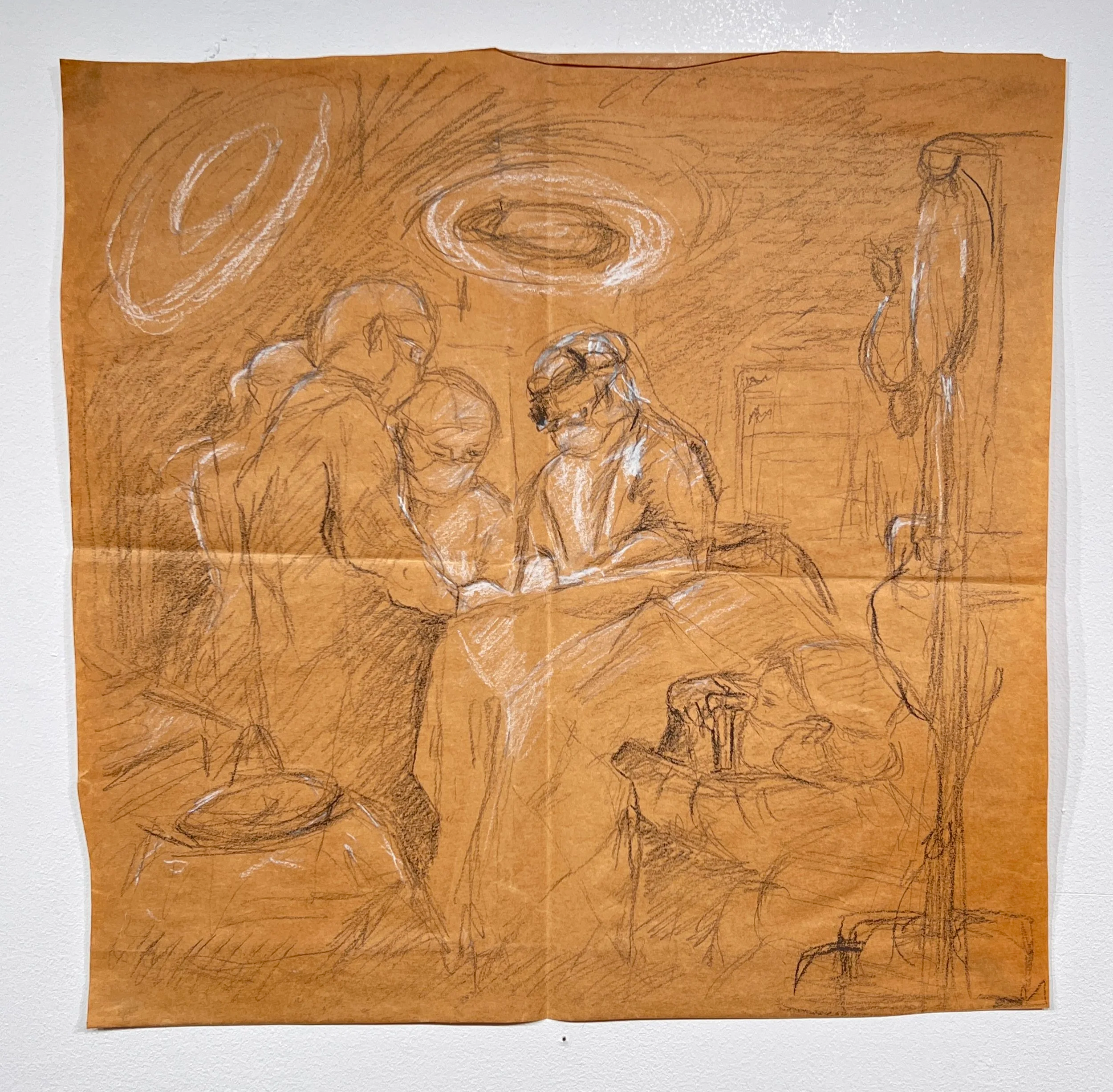
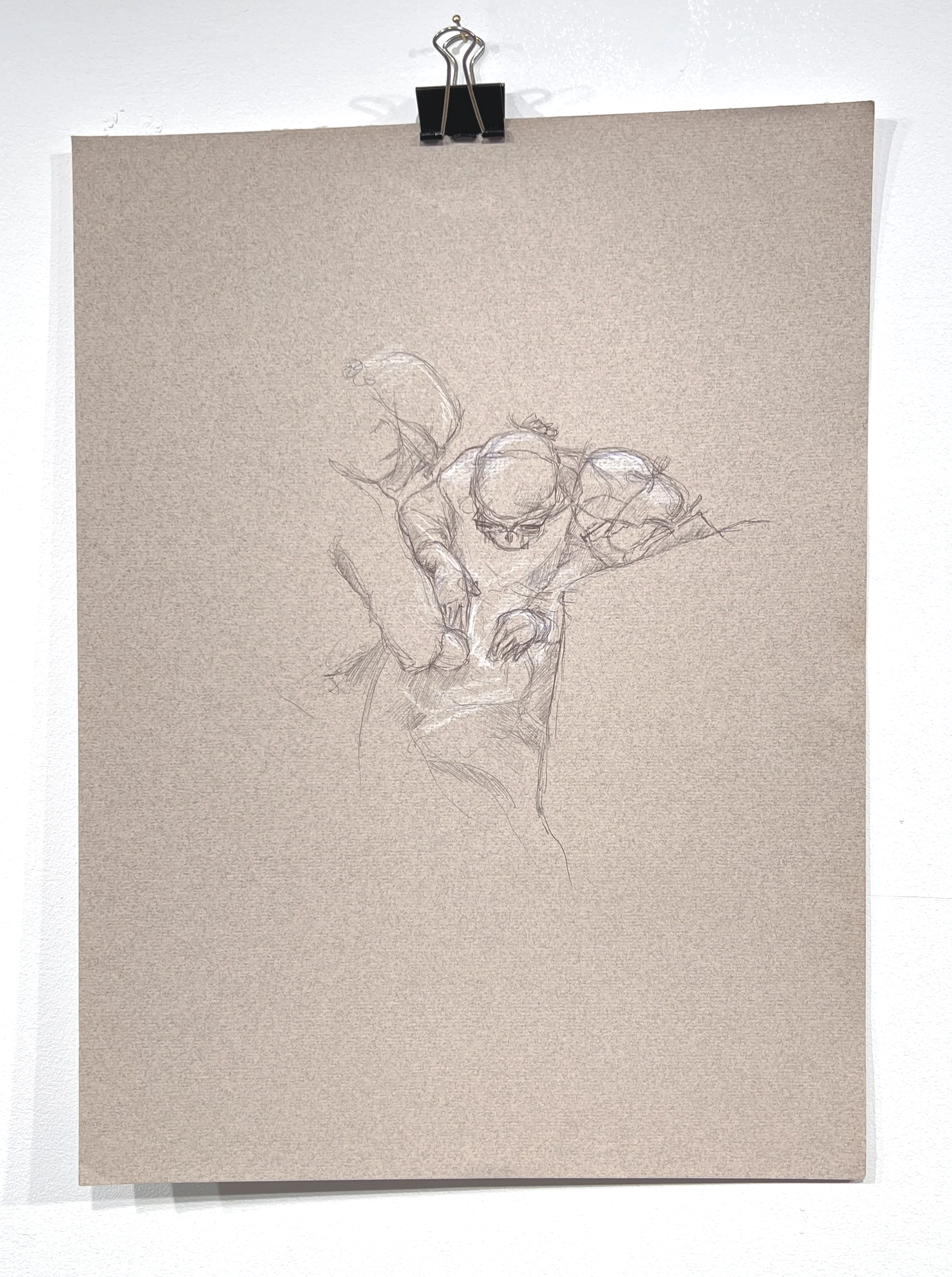
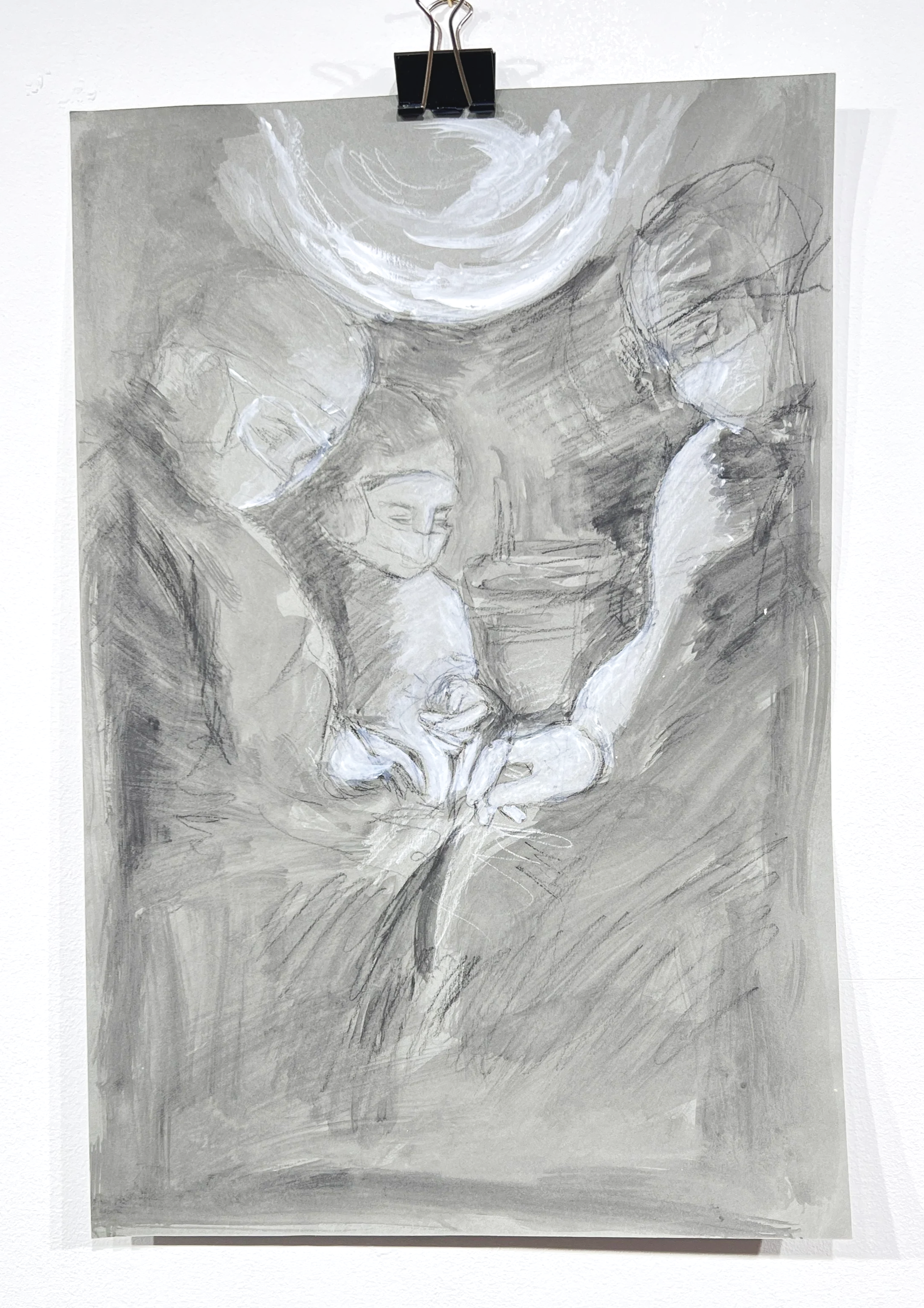
Surgical team with the anaesthetist checking the scope at the patient’s head. Black pencil and chalk on brown paper
I find in looking through my notebooks, again and again, that I was fascinated by the light of the operating theatre. The overhead lights could be moved and were made of concentric circles of bulbs of a curiously ‘clear’ light. As the light focused on the open heart, it felt (particularly in contrast to the surrounding blue draping), that it was the heart and opening that was itself glowing. It was reminiscent of the revelations in classical painting. The contrast with the more quotidian lighting in the surrounding rooms only heightened the effect.
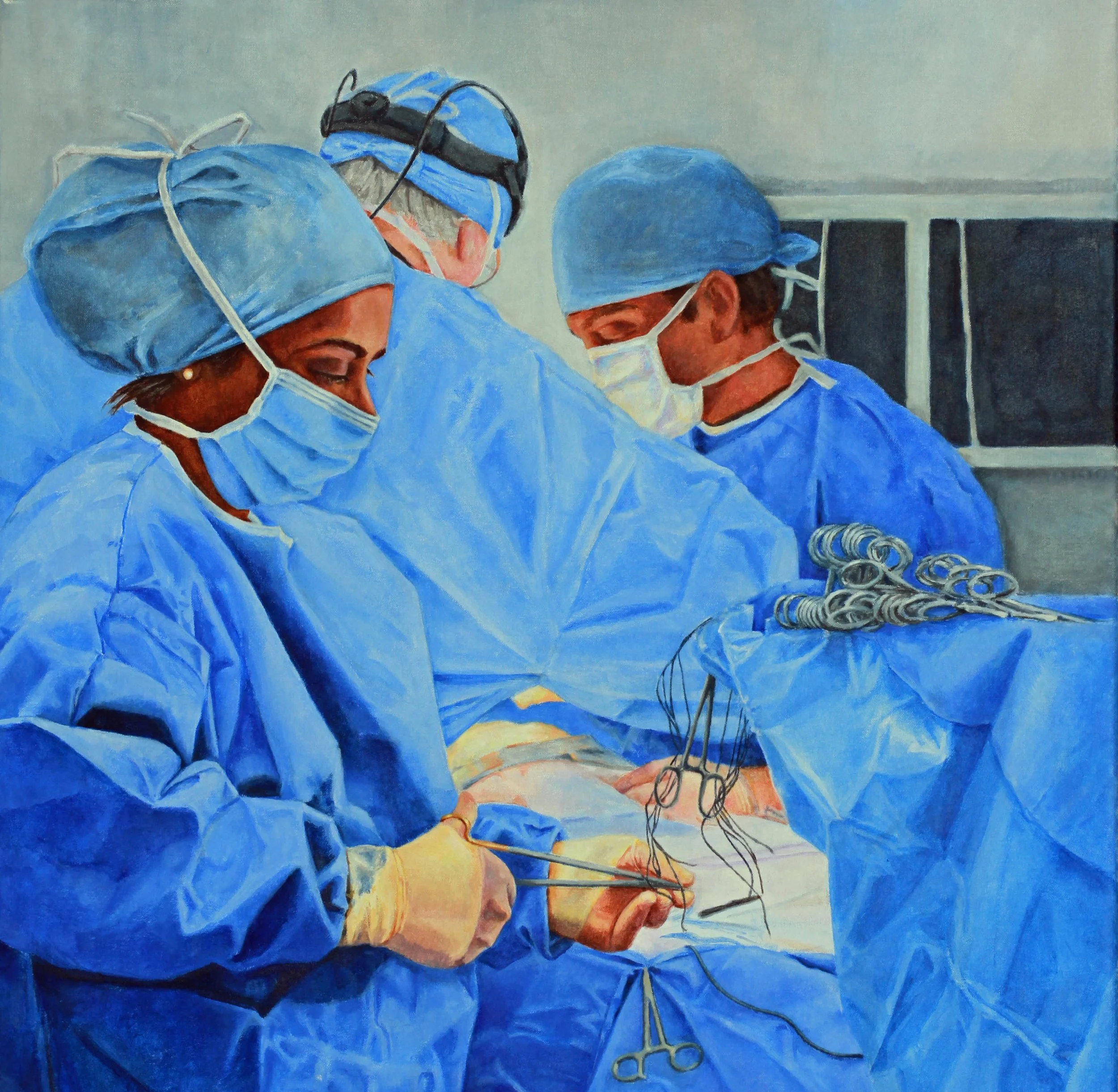
The lights also made the colours in theatre more clear. When I made paintings later on, I loved the clarity and vividness of the blues (a deal of ultramarine, some cobalt and some cerulean). The contrast with the creamy yellows of the translucent latex gloves was a challenge I loved.
Notional Artworks - the Importance of Daydreaming
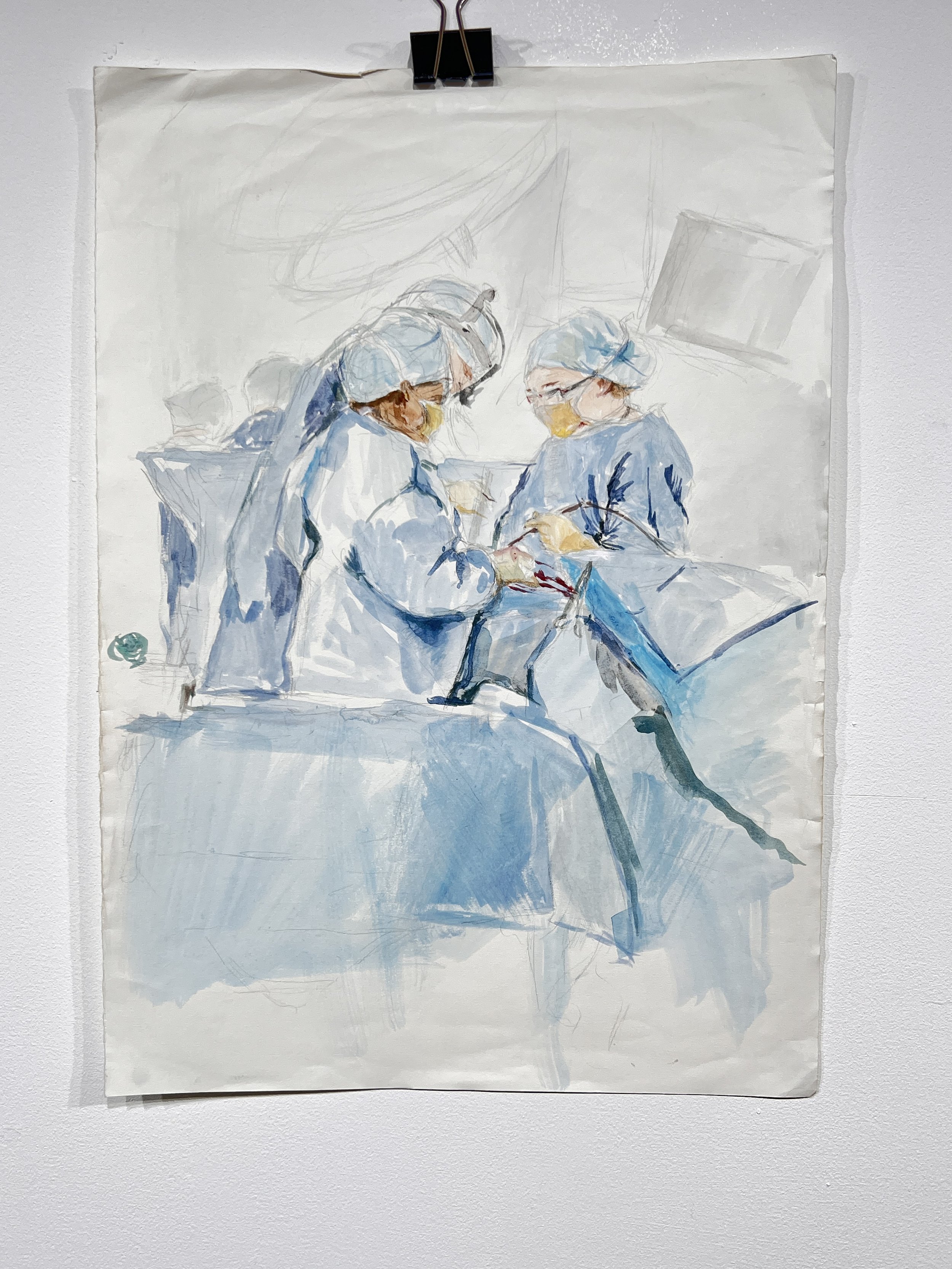
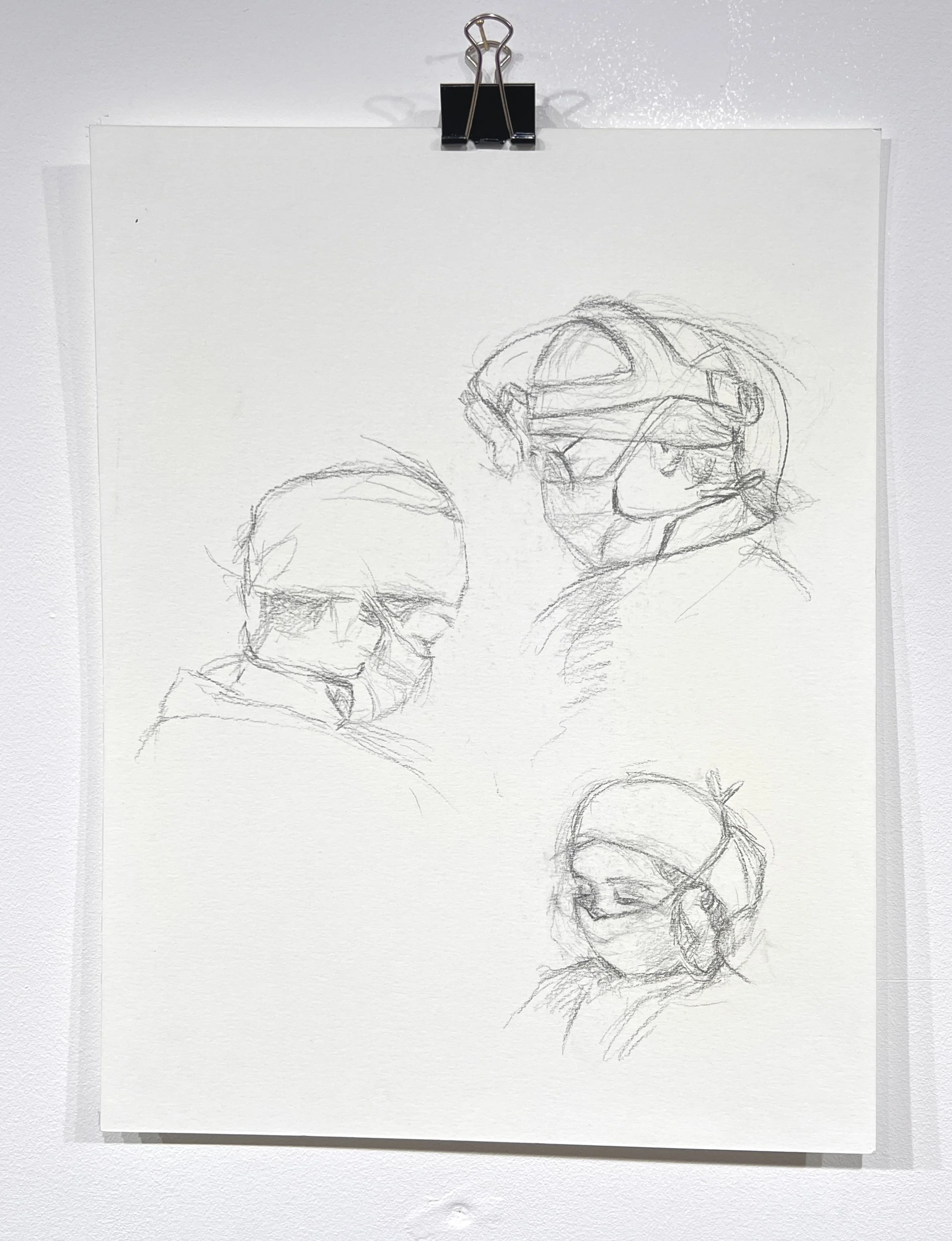
Surgical team with cauterising tools - heat is used to seal the edge of the wound opening. Pencil and acrylic wash on paper
Recently, I have been working my way through my full archive of work, checking what to keep or discard, checking that works are photographed and dated. In this process, I had the excuse to go through the portfolio of drawings that I made during my artist residency at Papworth. In writing this blog, prompted by some of these drawings being exhibited at the Hunterian Museum, I drew from extensive writings in my notebooks of the time. The impressions I found in the notebooks gave me an extra insight into the residency that I had not fully remembered.
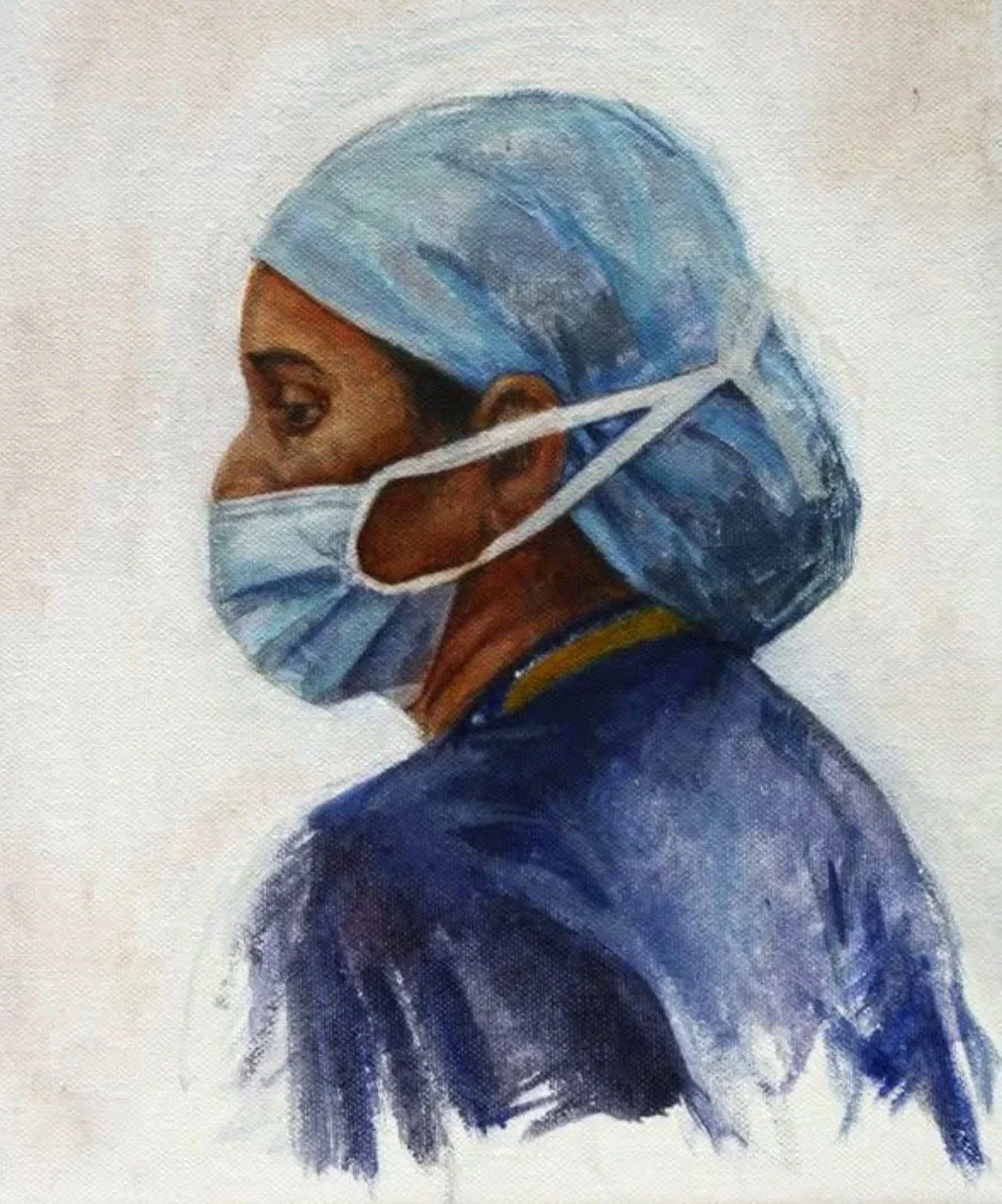
After making the surgery drawings, I made four paintings, two of which were later sold.
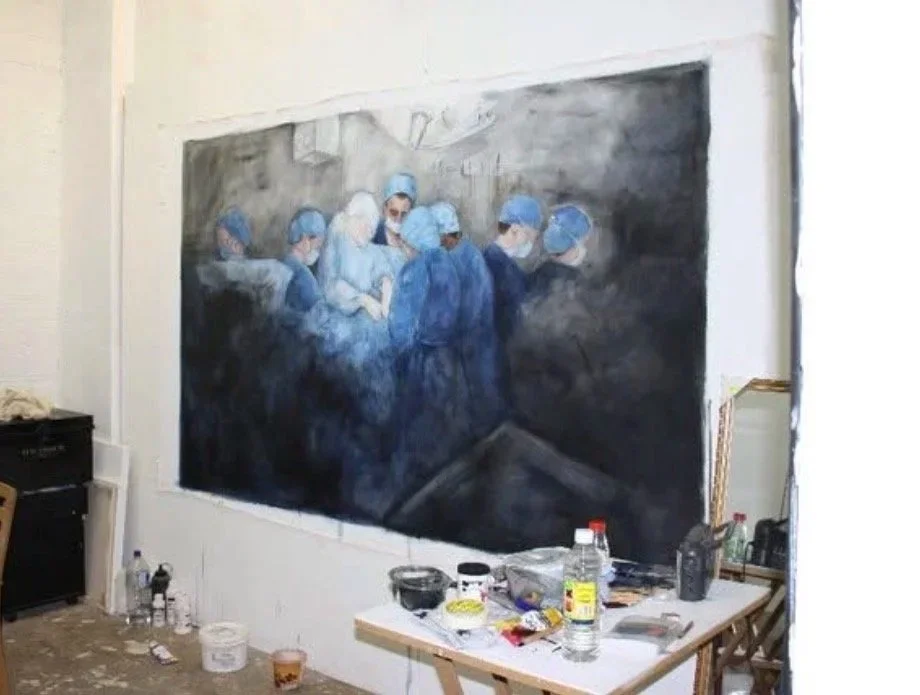
One very large painting was never finished but it gave me pleasure to look at it and I can see where my interest was most acute. Also in my notebooks, reading them back, I was delighted to find several free verse poems, as well as designs for installation art pieces, about being in the operating theatre. One design that struck me in particular was for a sound piece where each directional speaker relayed the narrative of each person in the theatre around the edges of the room and where at the centre the visitor could hear all voices overlaid. I loved the idea of this as a means to show collaboration, polyphony and the active nature of surgery.
As artists, coming up with concepts for new works goes hand in hand with discovery and exploration of ideas, whether a ‘final piece’ is realised or not. Observational drawing is a means of discovery; by looking long we notice things we had not anticipated and new connections are created. The concept stage can take the form of daydreaming (sometimes the wellspring of creativity!) which, especially when it follows close observation, can stimulate a creative flow. That cycle of working then thinking then working is one of my favourite processes; the thinking/daydreaming phase often gives way to a flurry of making imbued with the thing we artists love the most, the feeling that what we are doing is exactly what we are supposed to do.
The artist residency in cardio thoracic surgery at the Papworth Hospital is unique in my career as an artist. It was started during my first months as a working artist and solidified the skills in observational drawing I had developed when I was a student artist. When I draw a hand or think about how to portray a group of figures, or when I paint a clear light falling on a drape of blue fabric, I remember this formative time.
and Look through some of the drawings…